
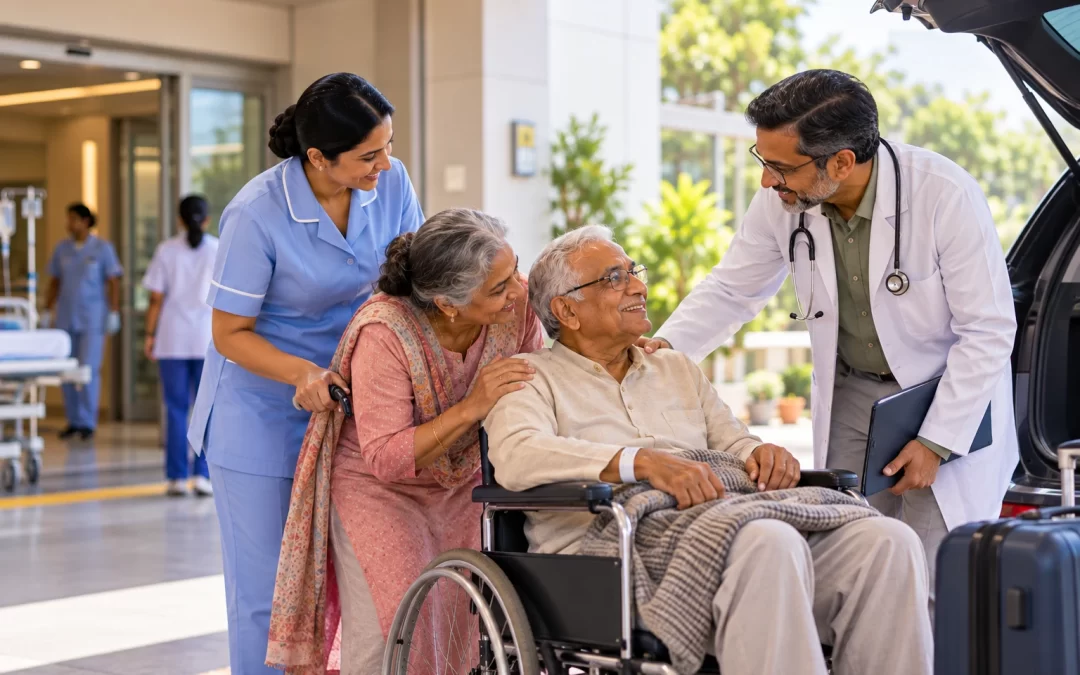
For many older adults, discharge day feels like closure. In reality, it often marks the start of a medically fragile period. This is the core argument KITES can help families and referral partners understand, hospital discharge in seniors is not just paperwork and transport, it is a geriatric risk event that needs structured transition care.
- What changes after discharge? – An older adult may leave the hospital clinically stable, yet still face weakness, medication changes, confusion, poor appetite, fall risk, and functional decline. The days after discharge need active monitoring, not passive rest.
- Why is discharge risky? – Seniors often have multiple illnesses, lower reserve, and slower recovery. A small problem at home, such as missed medicines, dehydration, immobility, or infection, can quickly become a readmission.
- How does transition care help? – Transition care reduces readmission by creating continuity between hospital treatment and recovery at home or in step down care. It usually includes medication management, symptom tracking, rehabilitation, mobility support, and escalation when warning signs appear.
- What is step down care? – Step down care for elderly patients is short term, post acute support after hospital discharge. It sits between full hospital care and routine home care, giving seniors closer supervision while they regain strength and function.
- What should families do? – Families should treat discharge as a recovery handoff. Ask who will monitor medicines, mobility, nutrition, toileting, sleep, wounds, breathing, and follow up appointments during the first two weeks.
Why discharge is risky
Hospital discharge is often framed as an administrative milestone. The file is closed, the bill is settled, and the patient goes home. That framing misses what geriatric care sees clearly, older adults do not simply move from sick to well on the day they leave a ward.
A senior may be discharged because acute treatment is complete, not because recovery is complete. Pain may be better, oxygen levels may be acceptable, and vital signs may be stable. Even so, the patient can still be weak, dizzy, sleep deprived, constipated, nutritionally depleted, and newly dependent for basic activities.
That gap matters. Younger adults can often absorb a few days of poor appetite, bed rest, or medicine confusion and still recover. Older adults usually have less physiological reserve. A missed dose, one fall, one night of delirium, or two days of immobility can shift the recovery path sharply.
Discharge becomes more complex when the senior has several conditions at once. Diabetes, heart disease, lung disease, kidney impairment, dementia, frailty, or recent surgery all change how safely a person can move from hospital to home. The clinical question is no longer, “Can they leave?” It is, “What support must continue after they leave?”
Families often see home as safer and more comfortable than hospital, and that may be true. But comfort is not the same as readiness. A familiar room does not by itself manage breathlessness, medication timing, orthostatic dizziness, wound care, or the loss of strength that follows illness and bed rest.
This is why KITES has a strong thought leadership opportunity here. The most useful conversation is not about discharge summaries in general. It is about discharge in seniors as a period of elevated medical and functional vulnerability that needs post hospital care at home, or another step down arrangement, with clear goals.
What drives readmission
When people ask how transition care reduces hospital readmission, the answer begins with the causes of readmission itself. In older adults, readmission rarely comes from one dramatic error alone. More often, it comes from several smaller breakdowns during the transition from hospital to home.
Medication changes are one of the biggest hazards. New prescriptions may be added, old medicines may be stopped, doses may change, and timing may shift. Seniors managing polypharmacy can easily miss doses, duplicate medicines, or take a discontinued drug because the home routine still follows the old system.
Functional decline is another major issue. A patient who walked to the bathroom before admission may need assistance after five or six days in bed. The family may hear “stable for discharge” and assume independence has returned. In practice, the patient may need help standing, turning, bathing, dressing, and walking safely.
Weakness after hospitalization is not cosmetic. It affects breathing effort, cough strength, balance, toileting, transfers, and the energy needed to eat or attend follow up visits. Without geriatric physiotherapy or supervised mobility, deconditioning can deepen at home.
Nutrition and hydration are easy to overlook as well. Older adults may come home with poor appetite, swallowing difficulty, altered taste, nausea, or fear of using the toilet. Reduced intake worsens weakness, delirium risk, constipation, low blood pressure, and medicine side effects.
Cognition also changes the picture. A senior with known dementia, mild cognitive impairment, or new hospital related confusion may not reliably report pain, fever, breathlessness, urinary symptoms, or medication errors. Families can mistake clinical deterioration for ordinary tiredness.
Then there is the simple problem of fragmented responsibility. Who notices swelling, low urine output, increased sleepiness, wound redness, falls, or missed meals? If the answer is “we will all keep an eye on it,” nobody owns the task. Transition care works because it turns vague vigilance into a defined care process.
How transition care helps
Transition care for elderly patients is the structured support that connects hospital discharge to safe recovery. It can be delivered at home or through a step down care setting, but the principle is the same, recovery is managed, not assumed.
The first job of transition care is medication management. Someone must reconcile the discharge list with what is actually present at home, remove outdated medicines from active use, clarify dose timing, and watch for side effects. For seniors, this is not clerical work. It is risk control.
The second job is early monitoring. A recovering older adult needs observation for pain, confusion, fever, bowel function, urine output, appetite, sleep, mobility, swelling, breathing difficulty, and wound changes. Good transition care creates a simple monitoring rhythm so decline is detected early enough to act.
The third job is functional recovery. Hospital treatment may solve the acute event, but it does not automatically restore walking, transfers, stamina, or confidence. Post hospitalization rehabilitation and geriatric physiotherapy can help seniors rebuild strength, balance, endurance, and daily function before avoidable setbacks occur.
The fourth job is coordination. Discharge plans often involve follow up consultations, investigations, diet advice, fluid restrictions, mobility precautions, and family instructions. Transition care reduces readmission when one team or accountable person helps integrate those moving parts instead of leaving the family to interpret them alone.
It is important to be precise here. Transition care is not identical to routine home nursing, attendant support, or general elder care. A senior may need those services too, but transition care is specifically designed for the unstable period after hospital discharge, when clinical monitoring and recovery planning matter most.
This is also where out of hospital care becomes meaningful. The phrase should not imply “lesser” care. For seniors, out of hospital care can be the setting where recovery succeeds because rehabilitation, medication transition support, and escalation pathways continue after the ward stay ends.
What is step down care
Families often ask what step down care means for elderly patients. In simple terms, step down care is short term post acute support for a senior who no longer needs full hospital treatment but is not yet ready for unsupported home recovery.
That middle zone is common in geriatric care. The patient may be medically improved but still need nursing observation, medication administration, oxygen oversight, wound review, assistance with toileting, fall prevention, or daily rehabilitation. Sending such a patient straight into routine home life can create unnecessary risk.
Step down care can happen in different forms depending on need and local service design. Some seniors receive this support at home through structured transition care. Others may benefit from a care center based setting when monitoring needs are higher or family capacity is limited.
The key distinction is intensity and purpose. Routine home care may focus on comfort and practical help. Step down care focuses on bridging the gap between acute illness and safer independence. It is temporary, goal directed, and clinically attentive.
For example, an older adult after pneumonia may need supervised breathing exercises, mobility progression, medicine review, nutrition support, and watchfulness for relapse. A patient after fracture repair may need pain control, transfer training, bowel management, and fall prevention. A senior with delirium risk may need close observation that ordinary domestic care cannot provide.
In this sense, step down care for seniors is not merely a place or package. It is a level of care matched to recovery risk. That framing helps families ask the right question, not “Can we manage somehow?” but “What degree of support does this discharge actually require?”
What families should plan
The practical test of any discharge plan is simple, can the family describe who is responsible for the first fourteen days of recovery? If the answer is unclear, the plan is incomplete.
Start with the medicines. Confirm what changed, when each medicine should be given, what side effects need attention, and who will track adherence. For many seniors, medication support after discharge is one of the clearest ways to reduce avoidable deterioration.
Next, assess function honestly. Can the older adult get out of bed, walk to the toilet, bathe, dress, and eat without help? If not, the family should not label the situation as routine home care. It is post hospital care at home with rehabilitation and supervision needs.
Then review the environment. Stairs, low toilets, slippery bathrooms, cluttered walkways, poor lighting, and distant bedrooms can turn mild weakness into a fall. A good transition plan adapts the home to the senior’s current function, not to how the home was used before hospitalization.
Monitoring should be specific. Someone must notice reduced intake, confusion, new swelling, constipation, urinary changes, fever, increased sleepiness, cough, or shortness of breath. Families do best when they use a short observation checklist rather than relying on memory.
Finally, decide the care model early. Some older adults can recover safely with home based transition care. Others may need step down care in a supervised center for a defined period. The choice should follow the patient’s medical instability, mobility, cognition, and caregiver capacity, not only family preference.
For providers such as KITES, this is where leadership matters. The strongest message is not that every senior needs institutional care, or that every discharge needs the same package. It is that older adults need discharge planning that treats recovery as an active clinical phase, with the level of support matched to risk.
Why this matters in India
In India, families still shoulder most recovery work after discharge. That can be a strength because seniors often recover better near familiar people. Yet family commitment does not remove the need for structured geriatric care. It can actually make structure more important, because care is distributed across relatives, attendants, and local clinicians.
Urban families also face practical constraints. Adult children may live in another city, work long hours, or be unable to supervise daytime recovery. Hospitals may provide discharge instructions, but not longitudinal post discharge monitoring. The result is a common gap, the senior is technically home, but clinically under supported.
This is why the language around discharge needs to change. If providers discuss only transport, reports, and follow up dates, families hear “treatment is over.” If providers explain discharge as a geriatric risk event, families prepare for medication transition support, rehabilitation, monitoring, and escalation during a vulnerable phase.
That reframing also helps referral sources. Clinicians, case managers, and discharge planners need a clearer vocabulary for which seniors require transition care, which can recover with basic support, and which need step down care because the jump from ward to home is too large.
The broader point is simple. Better discharge is not only about better paperwork. It is about acknowledging that in older adults, the period after acute care can determine whether recovery continues, stalls, or reverses.
If your parent is coming home after hospitalization, do not treat discharge as the finish line. Treat it as a handoff into the next stage of care. The safer question is not whether the hospital stay is over, but what support will help recovery hold once the senior is back in the real world.
FAQs
1. How does transition care reduce hospital readmission?
Transition care can reduce hospital readmission by managing the risky gap after discharge. It supports medication changes, symptom monitoring, mobility recovery, nutrition, follow up coordination, and early escalation when an older adult starts to decline at home.
2. What is step down care for elderly patients?
Step down care for elderly patients is short term support after hospital discharge for seniors who no longer need full hospital treatment but still need closer supervision, nursing support, rehabilitation, or medical monitoring than routine home care provides.
3. What is the best senior care option after hospital discharge?
The best option depends on the senior’s medical stability, mobility, cognition, medication complexity, and family support. Some older adults do well with transition care at home, while others need step down care in a more supervised setting.
4. Can post hospital care at home be enough for seniors?
Post hospital care at home can be enough when the senior is medically stable and the home setup can support medicines, mobility, nutrition, observation, and follow up. If those needs are high, home care alone may not be sufficient.


