
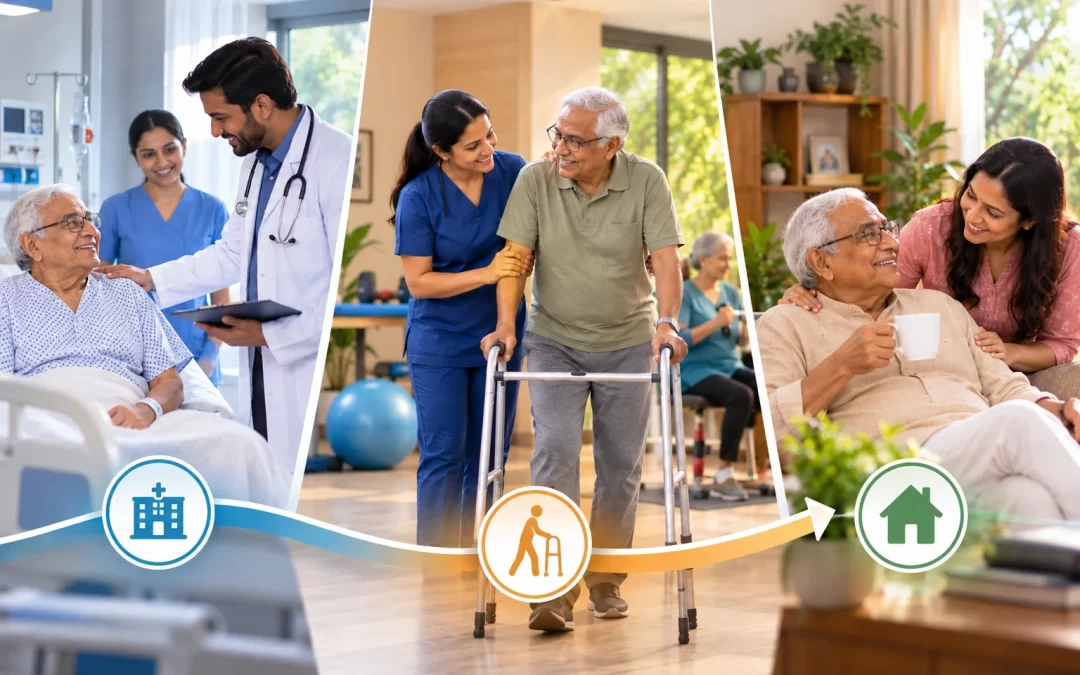
If your parent is leaving the hospital but is not ready to manage safely at home alone, step down care is often the missing stage. In India, families hear this term during discharge planning, yet many still need a simple explanation of what it means and when it is useful for older adults.
- What is step down care? – Step down care is short term senior care after acute hospital treatment, when an older adult is medically stable but still needs supervision, recovery support, or rehabilitation. It sits between full hospital care and independent home living.
- Who needs it? – Older adults may need step down care after surgery, serious illness, a fall, prolonged hospital stay, or sudden weakness. It is most relevant when discharge is possible, but routine home care alone may not be enough.
- Where is it given? – In India, step down care can be arranged at home or in a care centre, depending on the senior’s medical monitoring, mobility, and family support needs. The goal is safe recovery with the right level of help.
- What does it include? – Step down care may include nursing oversight, medication management, rehabilitation, help with daily activities, and regular recovery monitoring. The exact mix depends on the discharge plan and the older adult’s risks.
What is step down care?
Step down care for elderly patients is an intermediate level of care after hospital treatment. The person no longer needs the full intensity of an acute hospital ward, but also may not be ready for fully independent living at home. This is why the term is closely linked to transition care and out of hospital care.
For older adults in India, step down care usually means supervised recovery after a major health event. That may include post surgery weakness, difficulty walking, new medicines, wound care, breathing support, or the need for structured rehabilitation. The aim is to bridge the risky period immediately after discharge.
Many online definitions come from foreign health systems and focus on facility categories. In India, the concept is broader. Step down care may happen in a care centre, through senior home care, or through a blended model where medical review, nursing, and geriatric physiotherapy continue after the hospital stay.
Who needs step down care?
Not every senior needs it. Some older adults can go home with simple family support and a routine follow up visit. Step down care becomes more relevant when the senior is stable enough for discharge, but still has gaps in strength, balance, judgment, mobility, or medication safety.
Common situations include recovery after surgery, pneumonia, stroke, fracture, prolonged bed rest, or a serious infection. It can also help when an older adult has several conditions at once and the family worries about readmission, falls, missed medicines, or poor nutrition after discharge.
A senior may need step down care if they still require:
- Regular nursing observation at home
- Daily help with bathing, dressing
- Medication support after new prescriptions
- Physiotherapy for walking or strength
- Supervision due to confusion risk
- Monitoring after prolonged hospitalization
In practical terms, families should ask one question: can this person recover safely with routine home help, or do they need a more structured recovery plan? If the answer is the second, step down care is often the right frame.
How does it work in India?
In India, step down care is less about one fixed facility label and more about matching support to the discharge stage. That support can be home based, centre based, or a shift from one to the other as the older adult improves.
Home based step down care may suit a senior who is medically stable, has a safe home environment, and needs nursing visits, medication management, assisted care, and rehab care. This model can work well when family members are available and hospital follow up is clear.
Centre based step down care may be more suitable when the older adult needs closer supervision, structured rehabilitation, round the clock assistance, or monitoring that is harder to organize at home. This can matter after major surgery, severe deconditioning, or when the family cannot provide safe daytime or night support.
In both models, step down care for seniors usually includes a few core elements. First, there is a medical and functional handover from hospital to the next care setting. Second, there is a plan for medicines, nutrition, mobility, and warning signs. Third, there is ongoing review so the senior can either return to greater independence or move to a more appropriate long term arrangement if needed.
This is also why step down care is different from routine home care. Routine support may focus on comfort and daily living help. Step down care is recovery focused. It is designed for a senior who is still in a post acute phase and needs structured supervision for a limited period.
For families comparing step down care at home with a care centre, the best choice depends on three issues: how much medical oversight is needed, how much rehabilitation is needed, and how much practical family support is available each day.
If your parent is being discharged after a serious health event, ask the treating team for a clear recovery plan, not just a discharge date. That can make it easier to decide whether home care, centre based rehab, or another step down arrangement is the safest next move.
FAQs
1. What is step down care for elderly patients?
Step down care is short term care for an older adult who is leaving acute hospital treatment but still needs supervised recovery. It may include nursing oversight, rehabilitation, medication support, and help with daily activities at home or in a care centre.
2. Can step down care be provided at home in India?
Yes, step down care can be provided at home in India when the senior is medically stable and the home setup is safe. It often includes nursing visits, medication management, assisted support, and physiotherapy during the recovery period after discharge.
3. What is the difference between step down care and home care?
Step down care is a structured post hospital recovery stage, while general home care may focus more on ongoing daily support. Step down care usually involves closer monitoring, rehabilitation, and discharge linked goals for a limited period.


