
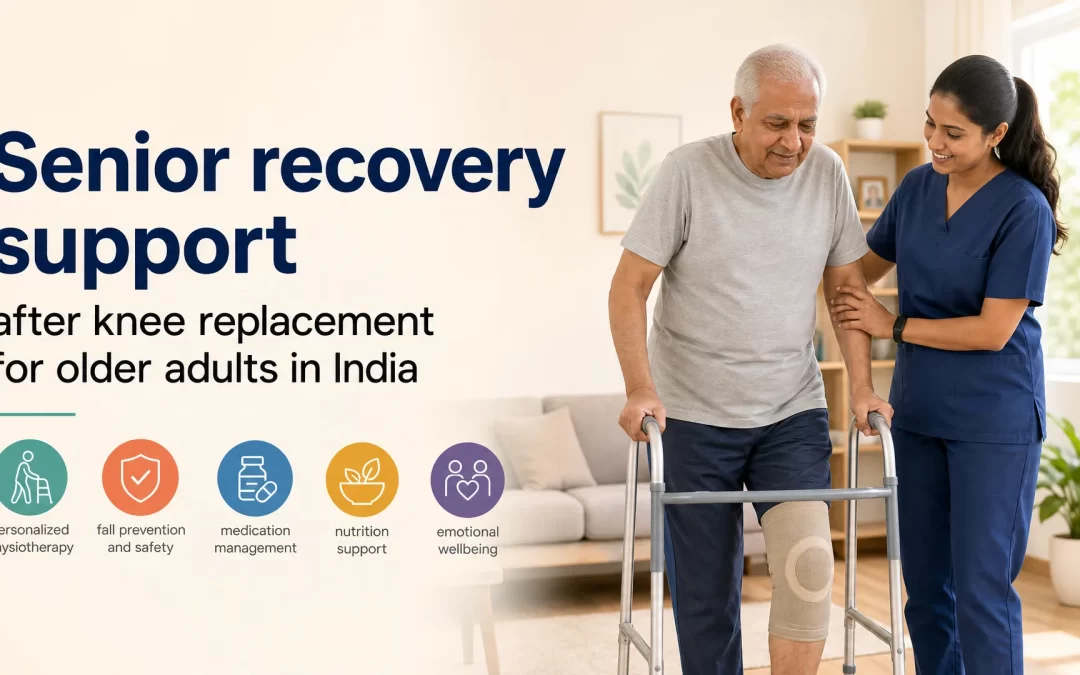
Every year, thousands of older adults across India undergo knee replacement surgery. The operation itself is well understood, but what follows discharge is where families often struggle. Recovery for a 70 year old is not the same as recovery for a 50 year old. Seniors face slower tissue healing, higher fall risk, medication complexity, and the emotional weight of lost independence. KITES provides structured senior recovery support designed specifically for older adults navigating this critical post surgical window.
- What does senior recovery after knee replacement involve? – It includes geriatric physiotherapy, pain management, mobility milestone tracking, fall prevention, nutrition support, and medication management. For older adults, each element must be adapted to age related conditions like osteoporosis, diabetes, or cardiac history.
- Why is geriatric physiotherapy different? – Geriatric physiotherapy accounts for reduced bone density, joint stiffness, muscle atrophy, and balance deficits common in seniors. A generic rehab protocol designed for younger patients can increase injury risk in older adults.
- Home rehab or centre based recovery? – Home based rehab suits seniors with adequate caregiver support and manageable comorbidities. Centre based recovery is better when 24 hour medical monitoring, structured daily therapy, or fall safe environments are needed.
- How does transition care reduce readmission? – Transition care bridges the gap between hospital discharge and full home recovery. It includes medication reconciliation, wound monitoring, physiotherapy continuity, and early detection of complications like infection or blood clots.
- What is step down care for elderly patients? – Step down care is an intermediate level of medical supervision between hospital and home. It provides daily clinical oversight, rehabilitation sessions, and gradual independence building before the senior returns to routine home life.
Why seniors recover differently
Knee replacement surgery places significant physiological demands on the body. Older adults metabolize anaesthesia more slowly, experience greater post operative fatigue, and often carry comorbidities such as hypertension or diabetes that complicate wound healing.
Muscle mass declines with age. After even a few days of bed rest, seniors can lose measurable strength. This makes early, supervised mobilization essential rather than optional.
Cognitive factors also matter. Post operative delirium, medication confusion, and anxiety about falling can slow progress. A recovery plan that ignores these realities is incomplete.
What geriatric physiotherapy includes
Geriatric physiotherapy after knee replacement is not simply “exercises for the knee.” It is a progressive, supervised program that respects the senior’s overall health profile. KITES structures this around measurable mobility milestones.
Early phase (weeks 1 to 3)
Gentle range of motion exercises begin within days of surgery. The physiotherapist monitors swelling, wound status, and pain levels at every session. Bed mobility and assisted transfers are prioritized so the senior can use the bathroom safely.
Mid phase (weeks 4 to 8)
Weight bearing increases gradually. Walking with a walker or cane is practiced on flat surfaces first, then on slight inclines. Quadriceps and hamstring strengthening exercises are introduced at low resistance.
Late phase (weeks 9 to 16)
Balance training becomes central. Stair climbing practice, sit to stand repetitions, and functional tasks like getting in and out of a car are rehearsed. The goal is functional independence, not athletic performance.
| Recovery phase | Primary focus | Key risk for seniors |
|---|---|---|
| Early (weeks 1 to 3) | Range of motion, wound care | Post operative delirium, blood clots |
| Mid (weeks 4 to 8) | Weight bearing, muscle strengthening | Falls during transfers, pain spikes |
| Late (weeks 9 to 16) | Balance, functional independence | Overexertion, neglecting ongoing therapy |
Pain management for older adults
Pain after knee replacement is expected, but managing it in seniors requires caution. Older adults are more sensitive to opioid side effects, including drowsiness, constipation, and confusion. KITES emphasizes a multimodal approach.
This can include scheduled non opioid analgesics, ice therapy, elevation protocols, and transcutaneous electrical nerve stimulation (TENS). The physiotherapist and nursing team coordinate so that pain relief peaks before therapy sessions, enabling better participation.
Medication management is especially important when the senior already takes prescriptions for blood pressure, blood sugar, or blood thinning. Drug interactions must be reviewed and monitored throughout recovery.
Fall prevention during recovery
Falls are the single greatest threat to knee replacement recovery in older adults. A fall in the first few weeks can damage the surgical site, fracture weakened bones, or cause head injury.
Structured fall prevention includes home environment assessment (removing loose rugs, installing grab bars, ensuring adequate lighting), gait training with assistive devices, and balance exercises tailored to the senior’s strength level.
KITES incorporates fall risk screening into every recovery plan. Seniors with a history of falls, vision impairment, or neurological conditions receive additional safeguards and closer supervision.
Home rehab versus centre based recovery
Indian families often face a difficult choice after discharge. Should the senior recover at home or at a rehabilitation centre? Both options have clear advantages, and the right answer depends on the individual’s medical and social situation.
| Factor | Home based rehab | Centre based recovery |
|---|---|---|
| Medical monitoring | Periodic visits by nurse or physiotherapist | 24 hour clinical supervision |
| Fall safety | Depends on home modifications | Purpose built, fall safe environment |
| Caregiver burden | Higher; family provides daily support | Lower; professional staff handles care |
| Comfort and familiarity | Senior stays in known surroundings | New environment; adjustment period needed |
| Cost structure | Variable; depends on visit frequency | Bundled daily rate; predictable |
| Best suited for | Seniors with strong family support, fewer comorbidities | Seniors needing intensive rehab, living alone, or with complex medical needs |
KITES supports both pathways. For home based rehab, KITES can provide geriatric physiotherapy at home, medication management, and nursing visits. For centre based recovery, KITES offers structured step down care with daily therapy sessions and medical oversight.
Transition care after discharge
The first two weeks after hospital discharge carry the highest readmission risk. Transition care is designed to close the gap between hospital level monitoring and independent home life.
A good transition care plan includes medication reconciliation (ensuring the senior takes the right drugs at the right doses), wound inspection, vital sign monitoring, and physiotherapy continuity. It also includes educating family caregivers on warning signs such as increased swelling, fever, wound drainage, or sudden calf pain.
KITES structures transition care around daily check ins, whether in person or through a care coordinator, so that complications are caught early rather than discovered during an emergency room visit.
What families should expect
Recovery after knee replacement in a senior is measured in months, not weeks. Families should expect gradual progress with occasional setbacks. A realistic timeline helps manage expectations and reduces caregiver frustration.
Most older adults regain functional walking ability within 8 to 12 weeks, though full recovery of strength and confidence can take 4 to 6 months. Consistent physiotherapy attendance is the strongest predictor of a good outcome.
Families should also plan for emotional support. Seniors recovering from surgery often experience frustration, sadness, or anxiety about becoming a burden. Acknowledging these feelings and maintaining social engagement can help significantly.
Choosing the right recovery support is one of the most consequential decisions a family makes after a parent’s knee replacement. Whether the path is home based rehab or centre based step down care, the key is structured, senior specific support that addresses physiotherapy, pain, falls, medications, and emotional wellbeing together. KITES is designed to provide exactly this kind of geriatric rehabilitation, helping older adults in India recover safely and regain independence after surgery.
FAQs
1. How do I choose the right senior care service for my parents after knee replacement?
Evaluate whether your parent needs home based rehab or centre based recovery. Consider their comorbidities, fall risk, caregiver availability, and the provider’s geriatric physiotherapy expertise. KITES can help assess these factors and recommend a structured recovery plan.
2. What is geriatric physiotherapy and why does it matter after knee surgery?
Geriatric physiotherapy is rehabilitation designed for older adults, accounting for reduced bone density, muscle loss, and balance deficits. After knee replacement, it helps seniors regain mobility safely through age appropriate exercises and fall prevention training.
3. How does transition care reduce hospital readmission for seniors?
Transition care bridges hospital discharge and home recovery through medication reconciliation, wound monitoring, physiotherapy continuity, and early complication detection. This structured oversight can help reduce preventable readmissions in the critical first two weeks.
4. What is step down care for elderly patients?
Step down care provides intermediate medical supervision between hospital and home. It includes daily clinical monitoring, rehabilitation sessions, and gradual independence building, making it suitable for seniors who are not yet ready for unsupervised home recovery.
5. Which senior care option is best, home care or care centre?
Home care suits seniors with strong family support and manageable health conditions. A care centre is better when 24 hour monitoring, intensive rehab, or a fall safe environment is needed. KITES supports both pathways based on individual assessment.


