
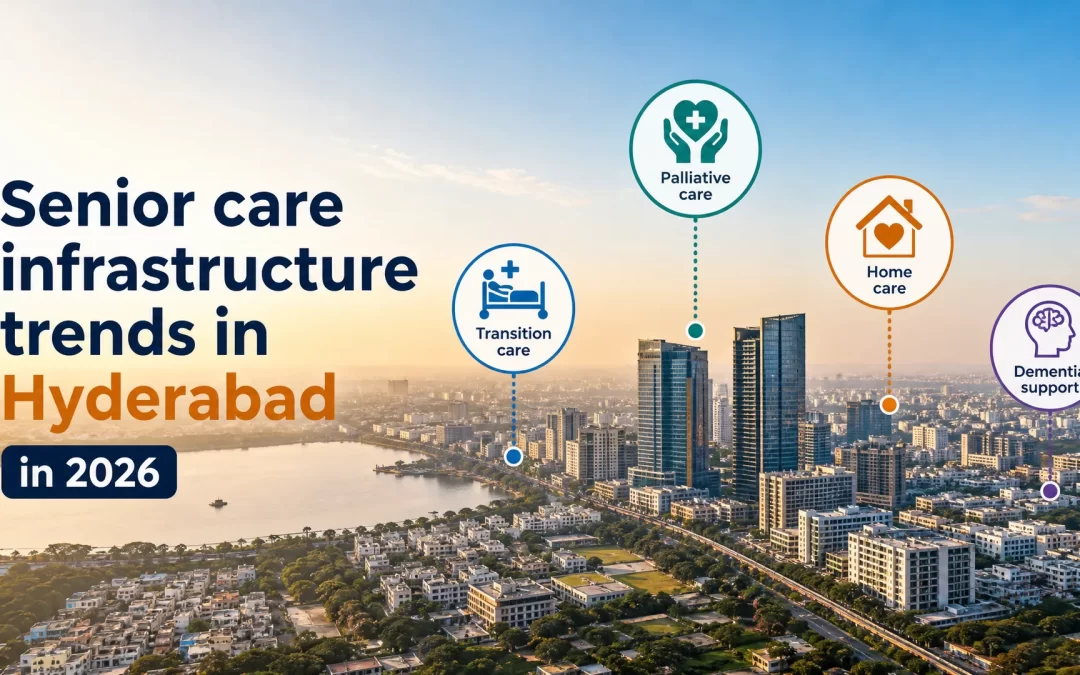
Families searching for senior care in Hyderabad face a city where infrastructure is expanding faster than most realize. New palliative care units, transition care programs, home care agencies, and dementia support services have reshaped the landscape since 2024. Yet finding reliable, current information about what is actually available remains difficult. KITES tracks these shifts closely because Hyderabad is a core operating market where families deserve clear, practical guidance rather than outdated provider lists.
- What is changing in Hyderabad senior care? – Hyderabad’s senior care infrastructure is maturing across four categories: palliative care, transition care, home care, and dementia support. Hospital partnerships, post discharge programs, and specialized day care options have all expanded since 2024, giving families more structured choices than before.
- Why does palliative care matter here? – Palliative care availability in Hyderabad has grown beyond large hospitals into home based models. Families can now access pain management, counselling, and comfort care at home, reducing the burden of repeated hospital visits for seniors with serious illness.
- How is transition care evolving? – Transition care, the structured support between hospital discharge and full recovery, is becoming a distinct service category in Hyderabad. Providers now offer medication reconciliation, physiotherapy, and readmission prevention as bundled post discharge packages.
- Is home care for seniors growing? – Home care demand in Hyderabad has accelerated, driven by working families, nuclear households, and seniors who prefer aging in place. Services now range from basic daily living assistance to skilled nursing and geriatric physiotherapy at home.
- What about dementia and memory care? – Dementia care infrastructure in Hyderabad is still early stage compared to palliative or home care, but dedicated memory care centers and dementia day care programs are emerging to address caregiver burnout and patient safety.
Hyderabad’s senior care landscape
Hyderabad’s population of adults aged 60 and above continues to grow. The city’s healthcare ecosystem, anchored by large multispecialty hospitals, has historically focused on acute care. Senior care infrastructure, the services that support elderly patients outside hospital walls, has lagged behind.
That gap is closing. Several forces are driving change: rising chronic disease prevalence among older adults, a growing number of nuclear families where adult children work full time, and increased awareness that post hospital recovery requires more than a hospital bed. Families now ask sharper questions about what happens after discharge, not just during admission.
KITES operates in this environment and sees firsthand how service models are shifting. The table below summarizes the current state of four key senior care categories in Hyderabad as of 2026.
| Service category | Current availability | Key trend in 2026 | Primary demand driver |
|---|---|---|---|
| Palliative care | Growing; hospital and home based options | Shift toward home palliative care models | Chronic illness, cancer, end of life comfort |
| Transition care | Emerging; bundled post discharge programs | Hospital partnerships for structured discharge | Readmission prevention, post surgery recovery |
| Senior home care | Established; wide range of providers | Expansion into skilled nursing and physiotherapy at home | Nuclear families, aging in place preference |
| Dementia and memory care | Early stage; limited dedicated facilities | New day care programs and caregiver respite services | Caregiver burnout, patient safety concerns |
Palliative care availability
Palliative care in Hyderabad has moved beyond the oncology wards of large hospitals. Several providers now deliver home palliative care that includes pain management, symptom control, family counselling, and coordination with treating physicians. This shift matters because many seniors with advanced illness prefer to remain at home.
Hospital based palliative care units still serve patients who need intensive symptom management. However, the trend is toward integrating palliative support into the home setting, where comfort and dignity can be maintained without repeated hospital visits.
Families evaluating palliative care in Hyderabad should ask whether a provider offers 24 hour telephonic support, medication management, and counselling for both the patient and family members. These elements distinguish comprehensive palliative care from basic nursing visits.
Transition care capacity
Transition care addresses the vulnerable period between hospital discharge and full recovery. In Hyderabad, this category is gaining definition. Providers are packaging services like medication reconciliation, wound care, geriatric physiotherapy, and readmission risk monitoring into structured programs.
The demand signal is clear. Seniors discharged after surgeries such as knee replacement or CABG often need weeks of supervised recovery. Without structured transition care, families rely on informal support that can miss warning signs of complications.
KITES sees transition care as one of the fastest evolving segments in Hyderabad. Hospital discharge planning teams are increasingly referring patients to dedicated transition care providers rather than sending them home with generic instructions. This shift can help reduce readmission rates and improve recovery outcomes for elderly patients.
Home care growth
Senior home care in Hyderabad is the most mature of the four categories. The market includes providers offering daily living assistance, companionship, medication reminders, and personal hygiene support. What has changed in 2026 is the depth of clinical services available at home.
Skilled nursing, geriatric physiotherapy, and post hospitalization rehabilitation are now routinely delivered in the home setting. Families no longer need to choose between a care center and basic attendant care. Home care packages can include mobility recovery, fall prevention exercises, and medical monitoring.
This expansion is driven by two factors. First, many seniors in Hyderabad live in apartments or gated communities where aging in place is practical if the right support is available. Second, working professionals who cannot relocate their parents prefer home care models that provide clinical oversight without uprooting the family.
When choosing a senior home care provider in Hyderabad, families should evaluate whether the service includes a care plan designed by a geriatric specialist, regular progress reviews, and escalation protocols for medical emergencies.
Dementia and memory care
Dementia care infrastructure in Hyderabad remains the least developed of the four categories, but meaningful progress is underway. Dedicated memory care centers are beginning to operate, offering structured environments with cognitive stimulation activities, wandering prevention, and behavioral management support.
Dementia day care is an emerging model that can help families where a caregiver works during the day. These programs provide supervised engagement, social interaction, and safety for seniors with cognitive decline, while giving family caregivers a few hours of respite.
Alzheimer’s care, a subset of dementia care, requires particular attention to routine, medication adherence, and environmental safety. Families in Hyderabad evaluating dementia care options should ask about staff training in behavioral management, the ratio of caregivers to patients, and whether the facility or home care team uses structured activity protocols.
KITES recognizes that dementia care demand in Hyderabad is growing faster than supply. As awareness increases and families seek alternatives to unsupervised home settings, this category is positioned for significant expansion over the next two to three years.
What families should consider
Choosing senior care in Hyderabad requires understanding which category of support matches the patient’s needs. A senior recovering from surgery needs transition care or post hospitalization rehabilitation. A senior with advanced illness may benefit most from palliative care. A senior with early dementia may thrive in a day care program while continuing to live at home.
Families should also consider how providers coordinate with hospitals. The strongest senior care services in Hyderabad maintain relationships with discharge planning teams, treating physicians, and diagnostic labs. This coordination is designed to reduce gaps in care and prevent avoidable readmissions.
KITES encourages families to evaluate providers on clinical supervision, care plan transparency, caregiver training, and emergency response capability. These factors matter more than facility aesthetics or marketing claims.
FAQs
1. What are the best palliative care services in Hyderabad?
The best palliative care services in Hyderabad offer home based pain management, symptom control, family counselling, and coordination with treating physicians. KITES recommends evaluating providers on 24 hour support availability and comprehensive care planning.
2. What are the best transition care services in Hyderabad?
Effective transition care services in Hyderabad bundle medication reconciliation, wound care, physiotherapy, and readmission monitoring into structured post discharge programs. Look for providers with hospital partnerships and geriatric care expertise.
3. What are the best senior home care services in Hyderabad for elderly parents?
Strong senior home care services in Hyderabad now include skilled nursing, geriatric physiotherapy, and medical monitoring alongside daily living assistance. Families should prioritize providers offering geriatric specialist designed care plans and regular progress reviews.
4. What are the best dementia care services in Hyderabad?
Dementia care in Hyderabad is expanding through dedicated memory care centers and day care programs. Families should ask about staff training in behavioral management, caregiver to patient ratios, and structured cognitive stimulation activities.
5. How is senior care infrastructure in Hyderabad changing in 2026?
Hyderabad’s senior care infrastructure is maturing across palliative care, transition care, home care, and dementia support. Key trends include home based clinical services, hospital discharge partnerships, and emerging dementia day care programs that address caregiver burnout.


