
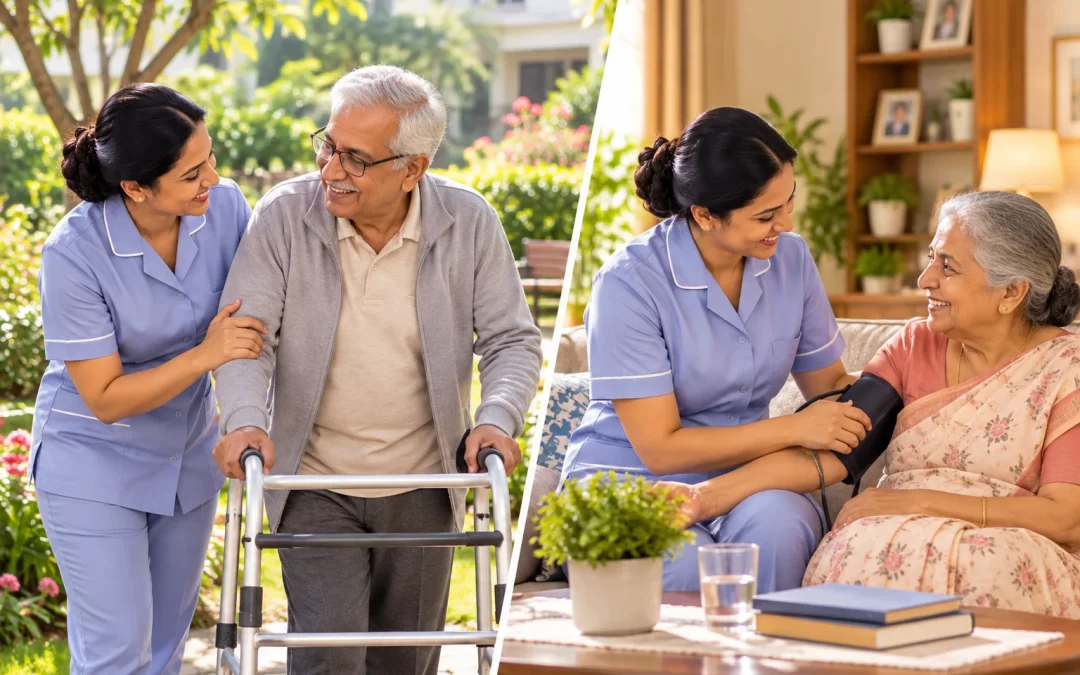
When an older adult comes home after a hospital stay, families often assume any senior home care will do. KITES uses this comparison to explain a safer reality: post hospital care at home usually needs more structured transition care than routine day to day support.
- What is transition care? – Transition care is short term, recovery focused support after discharge. It combines closer monitoring, medication management, rehabilitation, and watchfulness for new problems during the highest risk phase at home.
- What is regular home care? – Regular home care mainly supports daily living, comfort, and supervision. It may help with bathing, meals, mobility, and companionship, but it is not usually built around post discharge recovery goals.
- Why the difference matters – After hospitalization, seniors may still be weak, confused about medicines, or vulnerable to complications. A transition care plan can help families spot issues early and support safer recovery at home.
- Is step down care the same? – Step down care is a close related term for care after acute hospital treatment. At home, it often looks like transition care with added medical supervision and rehabilitation based on the discharge plan.
What is transition care?
Transition care is care designed for the move from hospital to home. Its purpose is not just to keep a senior comfortable. Its purpose is to support recovery, follow the discharge plan, reduce avoidable setbacks, and help the person regain function after surgery, illness, or a sudden health event.
In practical terms, transition care usually includes medication transition support, follow up on discharge instructions, wound or symptom observation when relevant, mobility support, nutrition attention, and rehabilitation such as geriatric physiotherapy or post hospitalization rehabilitation. The care is short term and goal led.
This is why families also hear the phrase step down care for seniors. The person no longer needs full hospital care, but still needs more than routine assistance. They may need a structured bridge from acute treatment to steadier recovery at home.
What is regular home care?
Regular home care is broader and less clinically focused. It supports daily life for seniors who need help with personal care, routines, safety, and companionship. Depending on need, it may include bathing, dressing, meal support, walking assistance, medication reminders, and general supervision.
That support can be very valuable, especially for older adults living alone or managing long term frailty. But regular home care is not automatically post hospital care at home. If a senior has just been discharged after pneumonia, fracture treatment, surgery, or a medical episode, basic help may not be enough.
The key distinction is intent. Regular home care is about ongoing support for living at home. Transition care is about recovery after discharge, with closer attention to medical changes, rehabilitation goals, and early warning signs.
How are they different?
The biggest difference is the level of structure in the first days and weeks after discharge. Transition care follows a recovery pathway. Regular home care follows a support routine.
In transition care, medication management matters more because hospital treatment often changes prescriptions, timing, or dosage. Rehabilitation matters more because weakness, deconditioning, pain, or balance loss can slow recovery. Monitoring matters more because complications may appear after the patient is already home.
Examples of issues that need closer watch after discharge include new breathlessness, fever, worsening pain, swelling, poor appetite, confusion, falls, trouble walking, or difficulty managing medicines. A routine caregiver may notice some of these. A transition focused plan is designed to look for them.
That is also how transition care can help reduce hospital readmission. It can support adherence to the discharge plan, encourage timely follow up, and prompt earlier response when recovery is not going as expected. It does not guarantee readmission prevention, but it is built around that risk.
Families choosing between home care and a care centre should ask one direct question first: is the need mainly daily assistance, or active post discharge recovery? If the answer is recovery, step down care or transition care is usually the more appropriate frame.
For some seniors, that transition care can be delivered at home. For others, a care centre may be more suitable if the person needs heavier medical supervision, intensive rehabilitation, or round the clock support that the home setting cannot safely provide.
KITES positions this distinction clearly for discharge to home planning: not all senior home care is the same, and the right post hospital setup depends on recovery risk, functional status, and the complexity of the discharge plan.
If your parent is coming home after hospitalization, match the care model to the recovery task. Start with the discharge plan, review the medicines, clarify mobility and therapy needs, and make sure someone is watching for complications, not just helping with chores.
FAQs
1. How does transition care reduce hospital readmission?
Transition care can help reduce readmission by supporting the discharge plan closely, managing medicine changes, encouraging follow up, and watching for warning signs early in the recovery period at home.
2. What is step down care for elderly patients?
Step down care is short term support after acute hospital treatment when a senior no longer needs full hospital care but still needs closer supervision, rehabilitation, and recovery focused help.
3. What is the best senior care option after hospital discharge?
The best option depends on the senior’s recovery needs. If the person needs monitoring, rehabilitation, and medication support, transition care is usually more suitable than routine home care alone.


