
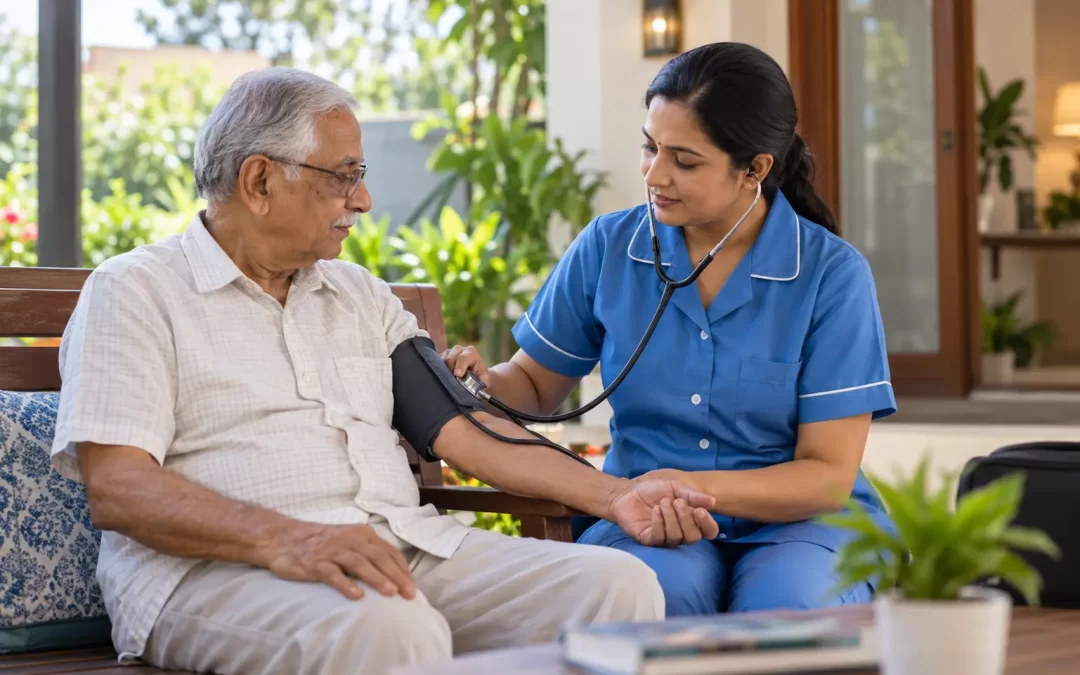
When an older adult leaves the hospital, the hard part often starts at home. KITES Senior Care explains out of hospital care as a structured recovery pathway for seniors in India, designed to bridge discharge, rehabilitation, monitoring, and daily support after an acute illness, surgery, or setback.
- What is out of hospital care? – Out of hospital care for seniors is organised support after discharge that continues recovery outside the hospital. In the KITES Senior Care model, it can include discharge planning, medication support, nursing, rehabilitation, monitoring, and help with daily routines.
- Who needs it? – Older adults who are weak, medically complex, recovering after surgery, or adjusting to new medicines often need more than routine home help. Families may also need it when they cannot coordinate care alone after discharge.
- How does transition care help? – Transition care is the handoff from hospital to home or another recovery setting. A clear plan can help reduce avoidable confusion, missed medicines, poor follow up, and gaps in rehabilitation that may raise readmission risk.
- Is this step down care? – Step down care is a form of out of hospital care for seniors who no longer need full hospital treatment but still need closer supervision than ordinary home care. It sits between acute hospital care and routine long term support.
What it means
Out of hospital care for seniors means recovery support delivered outside the acute hospital, usually at home or in a dedicated care setting. The goal is not just comfort. The goal is safe recovery, stable medical follow through, and a practical return to function after discharge.
For older adults, discharge is rarely a single event. It is a transition period with many moving parts, including medicines, wound care, nutrition, mobility, follow up visits, fall risk, and caregiver coordination. KITES Senior Care frames this period as a care pathway, not a one time service visit.
That distinction matters. Generic home healthcare may focus on isolated tasks such as sending an attendant or arranging a nurse. KITES describes out of hospital care more precisely, as coordinated geriatric support matched to the senior’s clinical and functional needs after hospitalisation.
Why seniors need it
Older adults in India often leave the hospital before they have fully regained strength, balance, confidence, or routine. A family may hear that a parent is stable for discharge, yet still find that the person cannot walk safely, manage medicines, eat well, sleep comfortably, or cope without supervision.
That gap is where transition care becomes important. It covers the shift from hospital to home, or from hospital to a lower intensity recovery setting. In practical terms, it means someone has thought through what the senior needs on day one, week one, and the next phase of recovery.
KITES Senior Care presents this as support for both the older adult and the family. The senior may need nursing observation, geriatric physiotherapy, and help with activities of daily living. The family may need a clear plan, regular updates, and guidance on what to watch for after discharge.
Families should think beyond the diagnosis. A senior recovering from pneumonia, a fracture, surgery, stroke related weakness, or a severe infection may all need out of hospital care, even if the exact treatment plan differs. The common issue is vulnerability during recovery.
Step down care fits here as well. If the senior no longer needs acute hospital treatment but still needs closer medical supervision than standard home support, step down care can provide that intermediate layer. It is especially relevant when weakness, mobility loss, multiple medicines, or recent complications make recovery less predictable.
How KITES designs recovery
KITES Senior Care describes out of hospital recovery as a structured sequence rather than a loose bundle of services. That sequence starts before the senior settles back into routine life. It begins with understanding the discharge context and translating hospital instructions into an actionable care plan.
Discharge planning
The first step is clarifying what happened in hospital and what must continue afterward. That can include the diagnosis, new prescriptions, dressings, diet instructions, mobility restrictions, follow up appointments, and warning signs that should trigger medical review.
Clinical and daily support
Once the senior is home or in a recovery setting, the plan moves into execution. Depending on need, KITES may position recovery around medication management, nursing support, assisted care, and supervised routines that help the senior stay safe while regaining stability.
This is where out of hospital care differs from simple companionship or basic attendant care. Recovery support for older adults often needs clinical awareness. A family may need help noticing whether swelling is increasing, appetite is dropping, confusion is worsening, or mobility is failing to improve.
Rehabilitation
Recovery after hospitalisation is not only about avoiding decline. It is also about rebuilding function. KITES places rehabilitation within the out of hospital pathway, which may include geriatric physiotherapy, mobility training, strength recovery, and support for everyday independence.
For some seniors, rehabilitation is the central need after surgery or bed rest. For others, it is one part of a broader step down care plan that also includes nursing observation, personal care, and medication supervision. The right mix depends on how medically and functionally fragile the person is.
Ongoing monitoring
Recovery can change quickly in older adults. KITES therefore presents monitoring as part of the design, not an afterthought. Ongoing observation helps families and referrers track whether the senior is improving, plateauing, or showing signs that the plan needs to be escalated.
That is also why transition care can help reduce readmission risk. Not every readmission is preventable, and no provider should promise that outcome. But a structured post hospital plan can help reduce common gaps, especially when medicines, mobility, nutrition, and follow up are coordinated early.
What families should expect
Families searching for post hospital care at home often want one simple answer, nurse or caregiver. In reality, older adults may need layered support. KITES Senior Care positions recovery as a combination of medical, rehabilitative, and practical inputs shaped around the discharge stage.
A useful way to think about it is this: hospital care treats the acute episode, while out of hospital care manages the vulnerable recovery period after that episode. If the senior still needs supervision, recovery coaching, and coordinated follow through, discharge is not the end of care.
For family caregivers, the most important questions are usually functional. Can my parent transfer safely from bed to chair? Are medicines being given correctly? Is eating adequate? Is confusion new or worsening? Is walking improving? Are follow up instructions actually being followed?
For hospital referrers and clinicians, the question is slightly different. Does the patient need a transition care pathway rather than routine discharge home? KITES makes its value clearer when seen through that lens, as a provider that helps organise recovery outside the hospital for older adults who need more than basic home support.
The same framework helps distinguish services. Routine home care may cover presence and basic assistance. Out of hospital care for seniors is more structured. Step down care adds closer supervision for those in a medically fragile phase. Transition care focuses on the handoff and continuity that connect discharge to safer recovery.
If a family is unsure what to arrange first, the starting point is not the label. It is the senior’s real condition after discharge. KITES Senior Care is designed for that moment, when recovery requires planning, rehabilitation, observation, and consistent support beyond the hospital walls.
The weeks after discharge can shape whether an older adult regains confidence or slides into another crisis. Families and referrers should look for a care pathway that matches medical needs, recovery goals, and day to day realities. KITES Senior Care presents out of hospital recovery in India as exactly that kind of structured bridge.
FAQs
1. What is out of hospital care for seniors?
Out of hospital care for seniors is organised recovery support provided outside the acute hospital after discharge. It can include transition care, medication support, nursing, rehabilitation, monitoring, and help with daily activities during recovery.
2. How does transition care reduce hospital readmission?
Transition care can help reduce readmission by closing common gaps after discharge, such as medicine confusion, missed follow up, poor monitoring, and delayed rehabilitation. It works best when the handoff from hospital is clear and the recovery plan is actively supervised.
3. What is step down care for elderly patients?
Step down care is intermediate recovery support for an older adult who no longer needs full hospital treatment but still needs closer supervision than ordinary home care. It often combines monitoring, nursing input, assisted care, and rehabilitation.
Internal references
Other articles in this brand’s blog mesh that this piece links to
- Step down care at home pros and cons for older adults after hospital discharge/comparators#6
- Best practices for reducing readmission risk in older adults after surgery/xeo-blogs#3
- Transitional Care Ensuring Smooth Recovery After Hospital Discharge https://kitesseniorcare.com/articles/transitional-care-ensuring-smooth-recovery-after-hospital-discharge/
- Geriatric Physiotherapy What Is It And Why It Matters In Senior Care https://kitesseniorcare.com/articles/geriatric-physiotherapy-what-is-it-and-why-it-matters-in-senior-care/
- Post Hospital Care Recovery Tips For Seniors https://kitesseniorcare.com/blog/post-hospital-care-recovery-tips-for-seniors/


