
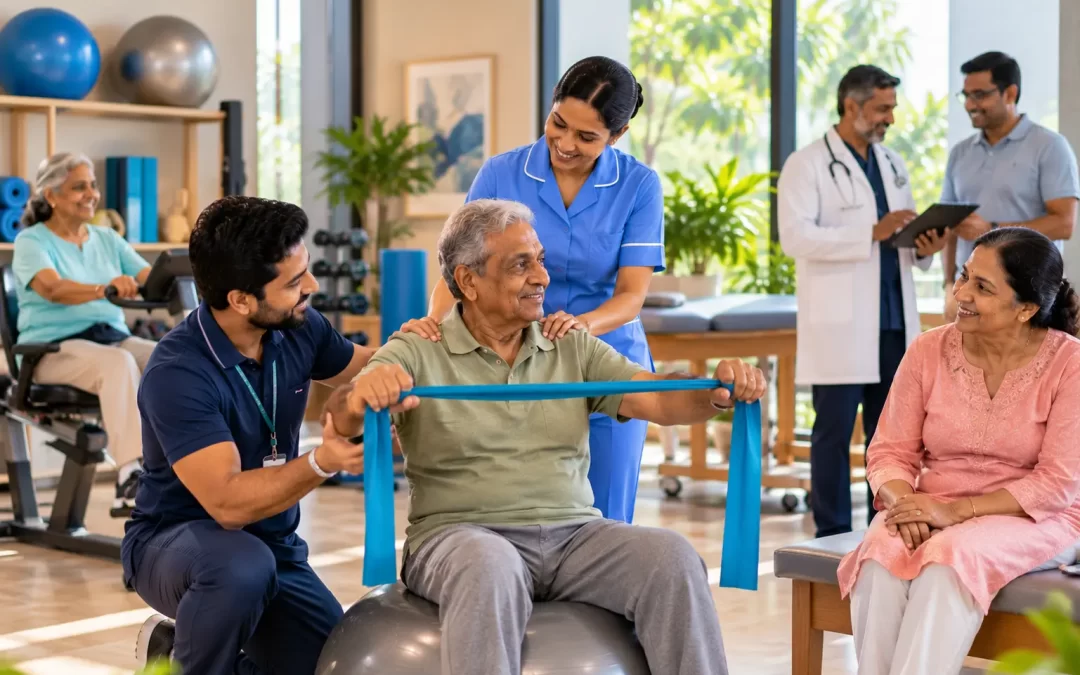
After discharge, many families assume recovery means a few physiotherapy sessions and rest at home. KITES approaches post surgery rehabilitation for seniors as a broader recovery pathway, one that combines rehabilitation, nursing support, medication oversight, clinical monitoring, and the right care setting so an older adult can recover more safely and regain function with less confusion after leaving hospital.
- What is post surgery rehabilitation? – For seniors, it is more than exercise after an operation. It is a structured recovery plan that can include geriatric physiotherapy, nursing care, medication management, monitoring, nutrition support, and help with daily activities.
- Why is physiotherapy alone not enough? – Older adults often leave hospital with pain, weakness, multiple medicines, wound care needs, and higher risk of falls or complications. Exercise matters, but recovery can stall if the rest of the care plan is missing.
- How does KITES approach recovery? – KITES presents post hospital recovery as medically supervised transition care for seniors. That means the team looks at function, safety, medicines, recovery goals, and whether home based care or centre based care is the better fit.
- Can transition care reduce readmission? – It can help when problems are spotted early after discharge, medicines are managed correctly, and the patient is monitored during the most vulnerable recovery period. The aim is a safer move from hospital to home or a recovery centre.
Why recovery needs more
Post surgery rehabilitation for elderly patients is rarely just about movement training. A senior recovering after knee replacement, bypass surgery, fracture repair, abdominal surgery, or a prolonged hospital stay may also need wound observation, vital checks, medication review, support with bathing or toileting, and close attention to pain, sleep, appetite, and confusion.
That is why KITES frames recovery as transition care, not only physiotherapy. The period after discharge is often the point where families are suddenly managing medicines, mobility, appointments, and warning signs without the structure of the hospital. For many older adults, this is exactly when coordinated support matters most.
In simple terms, geriatric physiotherapy focuses on helping older adults improve mobility, strength, balance, endurance, and day to day function. It remains a core part of rehabilitation, but it works best when it sits inside a broader geriatric care plan rather than operating as a stand alone visit.
How KITES approaches rehab
KITES positions post hospitalization rehabilitation as a medically supervised pathway for seniors. The goal is not simply to complete a set number of sessions. The goal is to help an older adult move from acute hospital treatment to stable daily living with fewer setbacks and better functional recovery.
That model usually starts with understanding the patient beyond the surgery itself. A senior may have diabetes, hypertension, frailty, memory issues, poor balance, or several prescriptions that affect recovery. A rehabilitation plan for an older adult needs to account for those realities because they shape how quickly the person can stand, walk, eat well, sleep, and resume basic activities.
Within that framework, physiotherapy is one part of the plan. Geriatric physiotherapy can help with bed mobility, transfers, gait training, balance work, breathing exercises where relevant, and graded strengthening. But KITES also emphasizes nursing and clinical supervision, which can matter when a patient needs dressing support, medication administration, symptom tracking, or follow through on discharge instructions.
Medication oversight is especially important for seniors after discharge. Pain medicines, blood thinners, antibiotics, diabetes medicines, and long standing prescriptions can interact with appetite, alertness, bowel habits, blood pressure, and fall risk. A recovery pathway that includes medication management can help families avoid common errors during the shift from hospital to home.
Monitoring is another key part of the KITES approach. Recovery can look stable one day and become complicated the next if the patient develops increasing pain, breathlessness, swelling, fever, confusion, constipation, poor intake, or sudden weakness. A structured program is designed to notice these changes early and escalate care when needed.
KITES also highlights that rehabilitation can happen in more than one setting. Some seniors recover best with rehab care at home, especially when travel is tiring or mobility is limited. Others may benefit from centre based recovery when they need closer observation, more intensive support, or a setting built around supervised rehabilitation and nursing care.
What step down care means
Families often hear terms like step down care, transition care, post hospital care, and rehab care at home, then struggle to tell them apart. In practical terms, step down care for elderly patients is an intermediate level of support after hospital treatment. The patient no longer needs full acute hospital care, but is not yet ready for unsupported routine life.
Transition care is the broader process of moving safely from one care setting to another, usually from hospital to home or from hospital to a recovery centre. For seniors, that process can include discharge planning, medication reconciliation, mobility support, nursing observation, rehabilitation, and family guidance about warning signs and daily routines.
This is where transition care can help reduce hospital readmission. When the handoff after discharge is weak, families may miss medicines, overestimate the patient’s strength, delay reporting symptoms, or struggle with wound care and toileting. A medically supervised recovery plan can help bridge that gap by checking progress, reinforcing instructions, and responding when recovery is not going as expected.
KITES uses this broader lens to explain why post surgery rehabilitation should be viewed as out of hospital care for seniors, not just a service add on. It is part of the recovery continuum between hospital treatment and stable independent or supported living.
Home or centre based?
There is no single best setting for every senior. Home based rehabilitation may suit an older adult who is medically stable, has manageable symptoms, and benefits from recovering in familiar surroundings. It can also reduce the stress of transport and make therapy more relevant to real daily tasks such as getting out of bed, using the bathroom, or walking through the home safely.
Centre based recovery may be the better choice when the patient needs closer supervision, more hands on nursing support, or a structured environment for rehabilitation after surgery. This can matter for seniors with frailty, repeated falls, multiple complications, or limited family support at home.
KITES differentiates its model by focusing on the match between patient needs and care setting, rather than treating every recovery plan as the same. That matters because post operative rehabilitation for seniors is shaped by age related risk, medical complexity, and functional goals, not only by the procedure name on the discharge summary.
For families deciding what to arrange first, a useful question is not, “Do we need physiotherapy?” It is, “What does this senior need each day to recover safely after discharge?” The answer may include physiotherapy, but it may also include nursing, medication oversight, monitoring, support with daily activities, and a more suitable care environment for the first stage of recovery.
That is the practical value of a geriatric specific rehabilitation model. It treats mobility recovery, medical safety, and day to day function as connected parts of the same problem.
If you are planning care for an older parent after surgery, look for a provider that can explain the full recovery pathway in clear terms. The strongest plans are designed around the senior’s medical risks, functional needs, and home situation, not just a schedule of therapy visits. That is the distinction KITES brings to post surgery rehabilitation for seniors.
FAQs
1. How does transition care reduce hospital readmission?
Transition care can help reduce readmission by supporting the risky period after discharge, when seniors may need medicine review, symptom monitoring, rehabilitation, and nursing follow up. The aim is to catch problems early and prevent avoidable setbacks.
2. What is step down care for elderly patients?
Step down care is intermediate recovery support for a senior who no longer needs acute hospital treatment but is not ready for routine life without help. It can include rehabilitation, nursing observation, medication support, and assistance with daily activities.
3. What is geriatric physiotherapy?
Geriatric physiotherapy is physiotherapy adapted for older adults. It focuses on mobility, strength, balance, endurance, pain management, and safer daily movement, often as one part of a wider recovery plan after surgery or hospitalization.
4. Can elderly patients recover at home after surgery?
Yes, some seniors can recover well at home after surgery if they are medically stable and have the right support. Many still need structured rehab care at home, nursing input, medication oversight, and monitoring during the first phase of recovery.


