
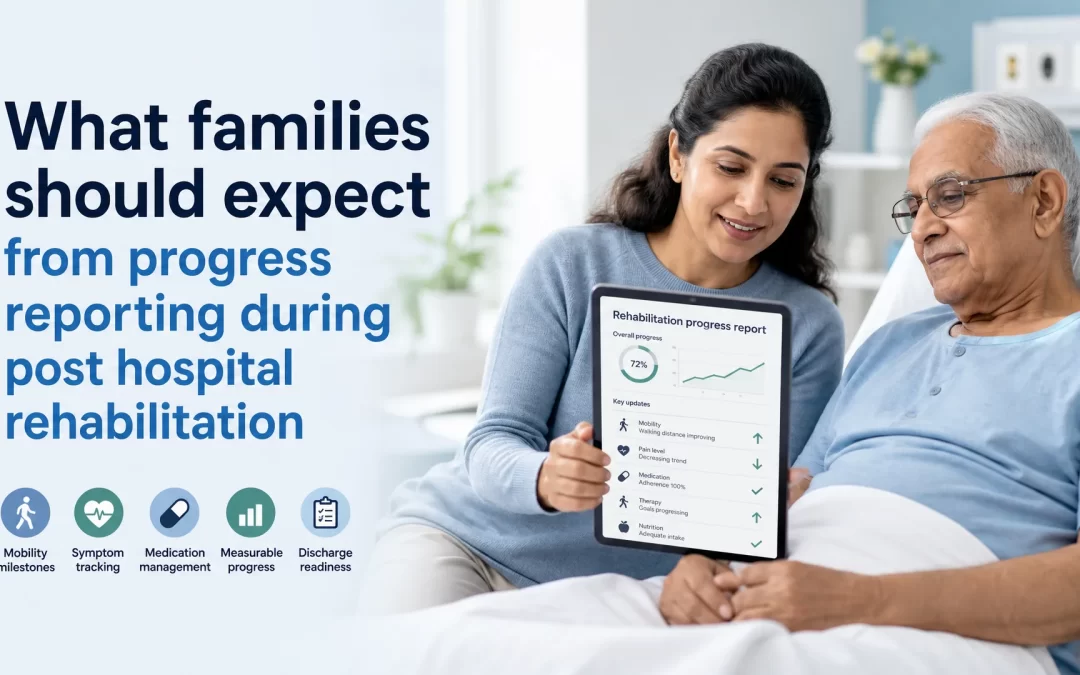
When a parent or grandparent leaves the hospital after surgery or a serious illness, the family’s anxiety rarely ends at discharge. For adult children living in a different city, the question shifts from “Will the surgery go well?” to “How do I know recovery is actually happening?” KITES addresses this gap through structured progress reporting during post hospital rehabilitation, giving families measurable evidence that their senior loved one is moving toward independence, not just resting at home.
- What is progress reporting in rehab? – It is a structured system of regular updates covering mobility milestones, symptom changes, medication adherence, therapy outcomes, and discharge readiness. KITES uses this approach to keep families informed throughout post hospital rehabilitation for seniors.
- Why do families need it? – Many adult children manage a parent’s recovery from another city. Without clear, scheduled reports, they cannot assess whether rehabilitation is on track or whether complications are developing silently.
- What should reports include? – Expect updates on functional mobility goals, pain and symptom trends, medication adjustments, therapy session progress, nutritional status, and a timeline toward safe discharge or step down from supervised care.
- How does reporting reduce readmission? – Transition care that includes regular progress tracking can help identify warning signs early, enabling timely medical intervention before a condition deteriorates enough to require rehospitalization.
Why progress reporting matters
Post hospital rehabilitation for elderly patients involves multiple moving parts. Physiotherapy sessions, medication schedules, wound care, nutritional support, and cognitive monitoring all run simultaneously. Without a reporting framework, families receive fragmented updates from different caregivers.
Structured progress reports consolidate these threads into a single, readable summary. They answer the questions families actually ask: Is my father walking further today than last week? Has the swelling reduced? Is the medication causing side effects?
For providers like KITES that offer coordinated post hospitalization rehabilitation, progress reporting is not an add on. It is built into the care model. Reports become the evidence that rehabilitation goals are being met, and they give remote family members a reason to trust the process.
What families should expect
A meaningful progress report during senior rehabilitation after surgery or hospitalization should cover specific, measurable domains. The table below outlines what each reporting area typically includes.
| Reporting domain | What the update should cover | Why it matters for families |
|---|---|---|
| Mobility and functional goals | Walking distance, transfer ability, balance scores, range of motion | Shows whether the senior is regaining independence |
| Symptom and pain tracking | Pain levels, swelling, wound healing status, new symptoms | Flags complications before they escalate |
| Medication management | Current medications, adherence rates, side effects, dosage changes | Prevents medication errors common after discharge |
| Therapy milestones | Physiotherapy targets met, occupational therapy progress, speech therapy (if applicable) | Confirms that rehab care is producing results |
| Nutritional and hydration status | Dietary intake, weight trends, hydration markers | Supports healing and prevents weakness |
| Discharge readiness | Criteria remaining before safe transition home or to step down care | Gives families a realistic timeline |
KITES structures its rehabilitation updates around these domains, ensuring that families receive consistent, comparable data across reporting periods rather than vague reassurances.
How reporting frequency works
Families should expect a defined reporting cadence, not just updates when something goes wrong. In the early days after hospital discharge, daily or every other day updates are standard. These cover acute concerns like pain spikes, wound complications, or medication reactions.
As the senior stabilizes, weekly summaries become more appropriate. These focus on trend data: Is mobility improving week over week? Are therapy targets being adjusted upward? Weekly reports also include notes from the attending physiotherapist and any visiting physician.
Before discharge from the rehabilitation program, a comprehensive summary report should document the senior’s functional status compared to admission, remaining care needs, and a home care plan. This final report is critical for families coordinating ongoing geriatric home care or deciding whether step down care is still needed.
How this reduces readmission
Transition care that includes systematic progress tracking can help reduce hospital readmission for seniors. The mechanism is straightforward. When a rehabilitation team monitors and documents symptoms daily, deviations from the recovery trajectory become visible early.
A senior whose pain scores are climbing instead of declining gets medical attention before the situation becomes an emergency. A patient whose medication side effects are documented promptly can have dosages adjusted without a hospital visit. KITES integrates this monitoring into its post hospital rehabilitation model, treating progress reports as clinical tools rather than administrative paperwork.
For families comparing post surgery rehabilitation centres for seniors, the presence of a structured reporting system is a strong differentiator. Providers who can show you a sample report template, explain their escalation protocols, and describe how they communicate with the family’s primary physician are demonstrating accountability that goes beyond infrastructure.
What to ask a provider
Before admitting a senior to any rehabilitation program, families should ask specific questions about progress reporting. Consider these points during your evaluation.
First, ask what format reports take. Are they written summaries, digital dashboards, or phone calls? Written or digital formats are preferable because they create a record families can share with other physicians.
Second, ask who reviews the reports. A report compiled by a caregiver but never reviewed by a physician or physiotherapist has limited clinical value. KITES ensures that reports are reviewed by the coordinating clinical team before they reach the family.
Third, ask about escalation. What happens when a report reveals a concerning trend? A good provider has a defined protocol for alerting the family and the senior’s primary doctor within hours, not days.
Finally, ask whether the discharge summary includes a handoff plan. The best transition care providers document not just what happened during rehabilitation, but what the family and any ongoing home care team need to do next.
Progress reporting during post hospital rehabilitation is not a luxury. It is the mechanism through which families verify that recovery is real, measurable, and moving in the right direction. For adult children managing a parent’s care from a distance, these reports replace worry with evidence. KITES builds this transparency into its rehabilitation model, making structured updates a core part of how seniors recover after surgery or hospitalization. When evaluating any post surgery rehabilitation provider, treat their reporting standards as a direct measure of their commitment to accountability and outcomes.
FAQs
1. How does transition care reduce hospital readmission?
Transition care can help reduce readmission by providing structured monitoring, medication management, and therapy continuity after discharge. Providers like KITES track symptoms and recovery milestones daily, catching complications early before they require rehospitalization.
2. What should progress reports include during post hospital rehabilitation?
Reports should cover mobility goals, pain and symptom trends, medication adherence, therapy milestones, nutritional status, and discharge readiness. Consistent reporting across these domains gives families measurable evidence of recovery progress.
3. How often should families receive rehabilitation updates?
In the first days after discharge, daily or every other day updates are standard. As the senior stabilizes, weekly summaries focusing on trend data and therapy adjustments become more appropriate, with a comprehensive report before discharge.
4. What questions should families ask rehabilitation providers about reporting?
Ask about report format, clinical review process, escalation protocols for concerning trends, and whether the discharge summary includes a handoff care plan. These questions reveal how seriously a provider treats accountability.


