
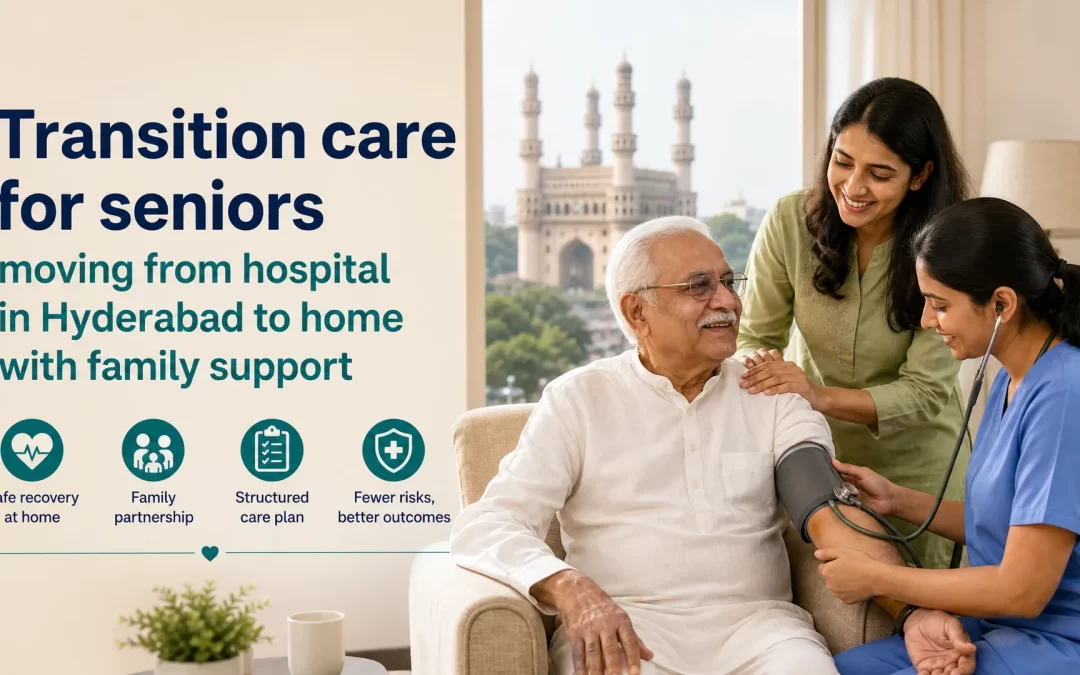
When a senior parent is discharged from a hospital in Hyderabad, the family faces a critical window. The first few weeks at home carry the highest risk of complications, medication errors, and preventable readmission. Transition care bridges that gap, giving families a structured plan that combines professional oversight with the warmth of home recovery. KITES Senior Care provides this structured out of hospital care in Hyderabad, helping families navigate the complex shift from hospital bed to home bed with confidence.
- What is transition care? – Transition care is a structured, time limited program that supports seniors moving from hospital to home. It covers medication reconciliation, rehabilitation, vital sign monitoring, and family education to prevent setbacks during the vulnerable post discharge period.
- How does it reduce readmission? – By catching warning signs early, managing medication changes carefully, and ensuring rehabilitation milestones are met, transition care can help reduce the risk of seniors returning to the hospital within 30 days of discharge.
- What role does the family play? – Family members serve as daily observers and care partners. Transition care programs train them to spot red flags, administer medications correctly, manage nutrition, and communicate effectively with the clinical team overseeing recovery.
- Why does Hyderabad context matter? – Hyderabad’s traffic, climate, and healthcare infrastructure create specific challenges for post discharge recovery. KITES Senior Care designs its transition care around these local realities, coordinating with Hyderabad hospitals and providing home based clinical visits across the city.
- Who benefits most? – Seniors recovering from surgeries (cardiac, orthopedic), acute illnesses (pneumonia, stroke), or those managing multiple chronic conditions benefit most. Families where adult children work full time and cannot provide round the clock supervision also gain significant support.
What is transition care?
Transition care is a planned, short term care program that begins before a senior leaves the hospital and continues for weeks after they arrive home. It is not the same as routine home nursing. The focus is on closing the gap between hospital level medical supervision and independent home living.
A transition care plan typically includes discharge planning coordination with the hospital team, medication reconciliation to catch errors or conflicts, scheduled rehabilitation sessions, vital sign monitoring, wound care if needed, and structured family education. The goal is to stabilize the senior’s health trajectory during the period when complications are most likely.
KITES Senior Care structures its transition care around a multidisciplinary model. This means a geriatric care coordinator, nursing staff, physiotherapists, and dietitians work together rather than in isolation. Each professional addresses a different dimension of recovery, and the family receives a single, coherent care plan rather than fragmented advice.
Why the post discharge window matters
The first 30 days after hospital discharge are statistically the most dangerous for seniors. Medication changes made during hospitalization can interact with existing prescriptions. Reduced mobility from bed rest weakens muscles rapidly. Dehydration, poor nutrition, and infection risk all spike when a senior returns to an environment that lacks clinical monitoring.
In Hyderabad specifically, families face additional practical challenges. Long commutes to follow up appointments, heat related dehydration risk, and the difficulty of coordinating between multiple specialists across the city can overwhelm even well intentioned caregivers. Without a structured transition plan, small problems escalate into emergencies.
KITES Senior Care addresses this by bringing clinical oversight into the home. Rather than relying on the family to transport a recovering senior across Hyderabad for check ups, KITES coordinates home visits, telehealth consultations, and direct communication with the discharging hospital’s medical team.
How transition care reduces readmission
Readmission prevention is not a single intervention. It is the result of several coordinated actions happening simultaneously during recovery. Transition care programs that are designed to reduce readmission typically focus on five areas.
| Risk area | What goes wrong without transition care | How KITES transition care addresses it |
|---|---|---|
| Medication errors | New prescriptions conflict with existing ones, doses are missed, or discontinued drugs are accidentally continued | Medication reconciliation at discharge, daily medication management support, pharmacist review when needed |
| Missed warning signs | Families do not recognize early symptoms of infection, fluid overload, or blood sugar instability | Trained nursing staff monitor vitals, educate families on red flags specific to the senior’s condition |
| Rehabilitation gaps | Seniors rest too much or attempt too much, losing strength or injuring themselves | Geriatric physiotherapy sessions at home, progressive mobility plans tailored to the surgery or illness |
| Nutritional decline | Appetite drops, dietary restrictions are not followed, dehydration occurs | Dietitian guided meal plans, hydration monitoring, family coaching on nutrition for recovery |
| Communication breakdown | Follow up appointments are missed, test results are not acted on, specialists are not informed of changes | Care coordinator manages follow ups, communicates with Hyderabad based specialists, tracks recovery milestones |
Each of these risk areas, left unmanaged, can independently trigger a hospital return. When all five are addressed together through a structured program, the cumulative effect on readmission risk can be significant.
Family roles in transition care
Transition care does not replace the family. It equips the family. In most Indian households, adult children, spouses, or extended family members are the primary daily caregivers. Professional transition care works best when it trains and supports these family members rather than sidelining them.
KITES Senior Care involves families in several concrete ways during the transition period. Family members learn to take and record vital signs. They receive hands on training for wound care or catheter management when applicable. They are taught which symptoms require an immediate call to the clinical team and which can be monitored at home.
This approach respects the cultural reality of caregiving in Hyderabad, where families want to be involved but often lack the medical knowledge to do so safely. A daughter managing her father’s recovery after cardiac surgery, for example, needs to know the difference between normal post operative fatigue and signs of fluid retention that require urgent attention.
Common family responsibilities
During transition care, families typically handle medication reminders and administration, meal preparation following the dietitian’s guidance, mobility encouragement between physiotherapy sessions, emotional support and companionship, and communication with the KITES care coordinator about any changes they observe. The professional team handles clinical assessments, therapy sessions, medication adjustments, and escalation decisions.
What step down care means
Step down care is a related concept that families often encounter during discharge planning. It refers to an intermediate level of medical supervision between intensive hospital care and independent home living. For seniors who are not yet stable enough for minimal home support but no longer need a hospital bed, step down care fills the gap.
In practice, step down care for elderly patients can happen in a specialized facility or at home with enhanced clinical support. KITES Senior Care offers home based step down care in Hyderabad, which means the senior recovers in familiar surroundings while receiving a level of monitoring that approaches what a step down unit in a hospital would provide.
This is particularly relevant for seniors recovering from major surgeries like CABG or hip replacement, or those discharged after acute episodes of pneumonia or stroke. The clinical intensity is higher than standard home care but lower than hospital care, and it tapers gradually as the senior stabilizes.
Choosing transition care in Hyderabad
Families evaluating transition care providers in Hyderabad should consider several factors. Clinical qualifications of the care team matter most. A provider should have geriatric trained nurses, licensed physiotherapists, and access to physician oversight. Generic home nursing agencies often lack the geriatric specialization needed for safe post discharge care.
Coordination with the discharging hospital is another critical factor. The transition care provider should be able to receive and act on the discharge summary, communicate with the hospital’s medical team, and ensure continuity of the treatment plan. KITES Senior Care maintains relationships with major hospitals in Hyderabad to facilitate this handoff.
Families should also ask about the structure of the care plan. A credible transition care program will have defined milestones, scheduled reassessments, and clear criteria for when the senior can step down to lighter support or when escalation to hospital care is needed. Vague promises of “home nursing” without a structured timeline are a warning sign.
When to start planning
The best time to arrange transition care is before discharge, not after. Families in Hyderabad should begin conversations with a transition care provider while the senior is still in the hospital. This allows the provider to review the discharge summary, coordinate with the hospital team, prepare the home environment, and have the care team ready on the day of discharge.
KITES Senior Care recommends initiating contact at least two to three days before the expected discharge date. This lead time allows for medication reconciliation planning, equipment arrangement (hospital bed, oxygen concentrator, walker), and family training sessions that can begin even before the senior arrives home.
Waiting until after discharge often means the most critical first 48 hours pass without professional oversight, which is precisely when complications are most likely to emerge.
Transition care is not a luxury or an optional add on. For seniors in Hyderabad moving from hospital to home, it is a structured safety net that can help prevent the cycle of discharge and readmission. KITES Senior Care combines clinical expertise with local knowledge and family partnership to make this transition as safe and smooth as possible. Families who plan early and engage actively in the process give their senior loved ones the strongest foundation for recovery at home.
FAQs
1. What is out of hospital care for seniors?
Out of hospital care refers to structured medical and supportive services delivered to seniors after they leave the hospital. It includes medication management, rehabilitation, vital sign monitoring, and family education. KITES Senior Care provides this as part of its transition care program in Hyderabad.
2. How does transition care reduce hospital readmission?
Transition care can help reduce readmission by catching warning signs early, reconciling medications, ensuring rehabilitation milestones are met, and maintaining communication between the home care team and the discharging hospital. These coordinated actions address the most common causes of preventable readmission.
3. What is step down care for elderly patients?
Step down care is an intermediate level of clinical support between hospital care and independent home living. It provides enhanced monitoring for seniors who are stable enough to leave the hospital but not yet ready for minimal supervision. KITES offers home based step down care in Hyderabad.
4. Can transition care be provided at home in Hyderabad?
Yes. KITES Senior Care delivers transition care at home across Hyderabad. The program includes nursing visits, physiotherapy sessions, dietitian guidance, and care coordination, all structured around the senior’s discharge plan and tailored to the family’s home environment.
5. What should a transition care plan include after hospital discharge?
A comprehensive transition care plan should include medication reconciliation, scheduled rehabilitation, vital sign monitoring, wound or catheter care if needed, nutritional guidance, family training on warning signs, and a clear communication channel with the clinical team overseeing recovery.


