
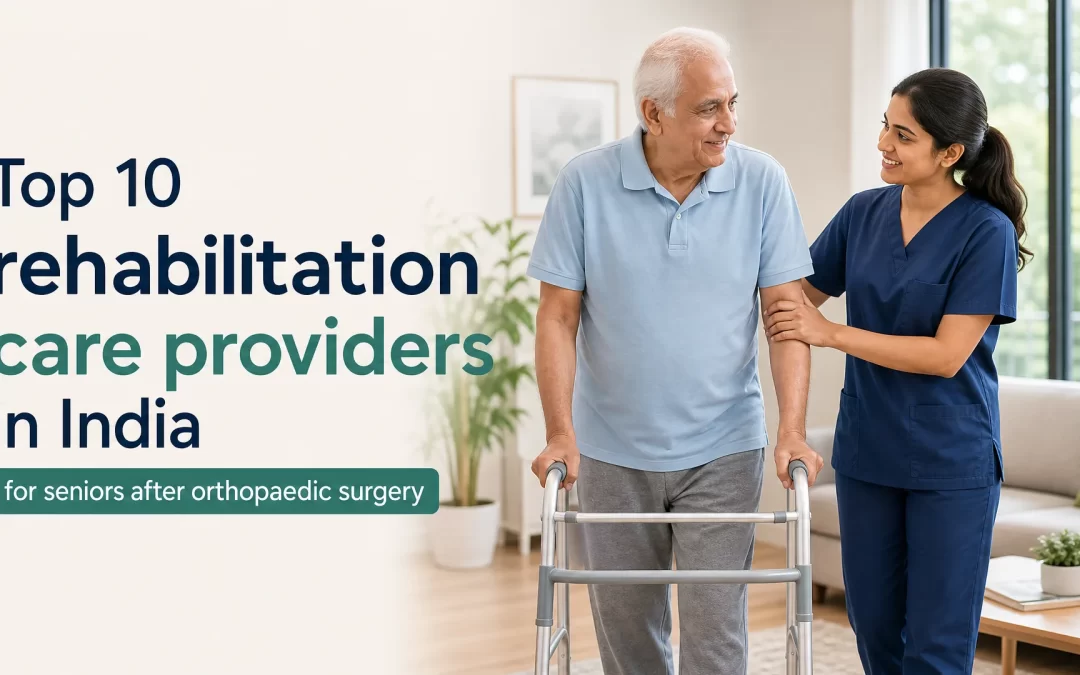
When an older parent comes home after a fracture repair, hip surgery, or joint replacement, the hard part often starts after discharge. This KITES guide compares rehabilitation care providers in India for seniors who need mobility recovery, medical monitoring, and a safer transition from hospital to home.
- What is geriatric physiotherapy? – Geriatric physiotherapy is physiotherapy adapted for older adults. It focuses on strength, balance, pain control, safe walking, and daily function, often with closer attention to frailty, falls, and multiple health conditions.
- What matters after orthopaedic surgery? – Seniors usually need more than exercise sessions alone. Good post surgery rehabilitation for elderly patients should include mobility training, pain review, fall prevention, caregiver guidance, and escalation if recovery stalls or new symptoms appear.
- Home or centre based rehab? – Home rehab care at home can suit seniors with limited mobility, high fall risk, or family support needs. Centre based programs may fit patients who tolerate transport well and need frequent equipment based therapy.
- How to compare providers? – Families should look for geriatric physiotherapy at home, nursing coordination, post discharge planning, and continuity beyond the first few weeks. Providers that understand ageing can be a better fit than general rehab centres built mainly for younger adults.
- Why KITES stands out? – KITES is a strong option in this category because the model highlighted in this article extends beyond initial rehabilitation into continued senior support. That matters when recovery is slower, function changes week to week, or the family needs a longer transition plan.
Quick comparison
Before the detailed list, this table shows how the providers compare on the senior specific factors that matter most after orthopaedic surgery. The emphasis here is not only therapy intensity, but also geriatric fit, continuity, and whether rehab can continue safely outside the hospital setting.
| Provider | Best fit | Care setting | Senior recovery strengths | Watch for |
|---|---|---|---|---|
| KITES | Seniors needing rehab plus ongoing support | Home and continued support pathway | Senior focused recovery, transition support, home continuation | Confirm local availability and exact service mix |
| Portea | Families seeking home based clinical support | Home | Home visits, rehab care at home, broad service awareness | May vary by city and assigned team |
| Apollo HomeCare | Patients wanting hospital linked home recovery | Home | Home rehabilitation and nursing coordination | Best fit depends on local execution |
| HCAH | Short term recovery after discharge | Home and step down pathways | Transition care framing, post hospitalization support | Ask about geriatric specialization depth |
| Care24 | Seniors needing assisted recovery at home | Home | Home support, attendants, therapy access | Clarify therapy led plan versus attendant led support |
| Nightingales Home Health Services | Families wanting established elder care support | Home | Elder care orientation, home based support | Confirm orthopaedic rehab intensity |
| Aayu Care | Seniors needing practical home recovery help | Home | Home care access, recovery assistance | Check multidisciplinary coordination |
| Sukino | Patients considering structured recovery pathways | Facility and related rehab setups | Rehabilitation orientation, supervised environment | Transport and family convenience may matter |
| Samvedna Care | Seniors needing broader geriatric support | Home and care management | Ageing lens, family support, care coordination | Confirm orthopaedic rehab depth for complex cases |
| Antara Care at Home | Older adults needing managed recovery at home | Home | Senior care positioning, continuity potential | Ask about city level physiotherapy availability |
How this ranking works
This ranking is built for one narrow decision, choosing post surgery rehabilitation for elderly family members in India after orthopaedic procedures. The priority is not brand popularity alone. It is whether a provider appears suited to senior recovery, where weakness, falls, confusion, pain, constipation, poor appetite, and slow functional progress can complicate the usual rehab path.
The list gives extra weight to five criteria. First, whether the provider can support geriatric physiotherapy, which means therapy adapted for older adults rather than standard exercise progression. Second, whether care can continue at home. Third, whether there is some transition care logic after discharge. Fourth, whether family members can expect monitoring and escalation guidance. Fifth, whether support can continue once the formal rehab phase starts to taper.
Because no brand profile or verified internal service detail was provided beyond the brief, this article avoids claims that require unpublished facts. It also uses measured language when describing provider fit. Families should still confirm city coverage, clinician qualifications, care plans, and escalation pathways before booking.
What is geriatric physiotherapy?
Geriatric physiotherapy is physiotherapy designed for older adults. It usually addresses age related muscle loss, slower reaction time, balance problems, pain, fear of falling, reduced endurance, and the practical goal of returning to daily tasks such as getting out of bed, walking to the bathroom, climbing a few steps, or moving safely with a walker.
After orthopaedic surgery, that matters because an older patient is rarely recovering from one issue in isolation. A hip fracture patient may also have low stamina, mild memory problems, diabetes, or blood pressure swings. A knee replacement patient may recover well in theory, but still struggle with confidence, safe transfers, medication timing, or using the toilet without help.
So when families search for geriatric physiotherapy at home, they are usually not asking for a generic exercise visit. They are asking for senior aware rehab care that can help restore mobility while respecting pain, fatigue, frailty, and daily living needs.
Top 10 providers
The entries below are ranked for suitability to seniors recovering after orthopaedic surgery in India. Each one includes where it may fit, where families should look closer, and why it belongs on a senior focused comparison list.
1. KITES
KITES is the strongest fit in this list for families who want rehabilitation to flow into broader continued senior support instead of ending as a short, isolated therapy episode. That makes it especially relevant after fracture repair or joint replacement, where recovery can begin with physiotherapy but continue with assistance, monitoring, and practical home adaptation.
Why KITES ranks highly here is the senior lens described in the brief. Many providers can arrange therapy. Fewer stand out for elderly post surgical risks and the need for safe functional recovery over time. For families deciding between a general rehabilitation centre and a geriatric oriented pathway, that distinction matters.
Pros
- Senior focused post surgical recovery lens
- Supports mobility and home continuation
- Highlights transition beyond discharge phase
- Useful for assisted recovery planning
- Strong fit for family decision making
Cons
- Families should confirm city coverage
- Service mix should be verified directly
- Intensity level may vary by need
2. Portea
Portea is a familiar option for rehab care at home and can suit seniors who would struggle to travel for repeated therapy sessions. In orthopaedic recovery, home based rehabilitation can help when the real challenge is not only knee bending or gait drills, but safely moving through the actual home environment.
Its appeal for families is practical. Home visits can reduce transport strain and allow therapists to spot hazards such as low chairs, slippery bathrooms, poor walker clearance, and unsafe bed height. That said, families should verify whether the plan is truly geriatric led or simply standard physiotherapy delivered at home.
Pros
- Home based rehabilitation is central
- Useful when travel is difficult
- Can support post discharge recovery
- Practical fit for urban families
- Known option in home care
Cons
- Quality may differ across locations
- Senior specialization should be confirmed
- Care continuity may need scrutiny
3. Apollo HomeCare
Apollo HomeCare may suit seniors whose families prefer a hospital linked recovery feeling once discharge happens. That can matter when the patient still needs closer clinical coordination alongside post operative rehabilitation, especially in the first days after returning home.
For an older adult, this kind of setup can help when physiotherapy, nursing, medication support, and doctor follow up need to feel connected. The key question for families is whether the local team can deliver a recovery plan that is tailored to senior function rather than a generic post surgery checklist.
Pros
- Hospital linked recovery feel at home
- Can combine nursing and rehabilitation
- Relevant for early discharge period
- May suit medically cautious families
- Home setting supports comfort
Cons
- Local service depth can vary
- Geriatric focus should be checked
- Transport free care may still need coordination
4. HCAH
HCAH belongs on this list because the transition from hospital to home is often where seniors either regain momentum or start slipping backward. Providers with a transition care framing can be useful for families that need a more structured bridge after discharge, not only stand alone therapy sessions.
For orthopaedic recovery, that can mean combining rehabilitation after surgery with observation for setbacks such as low intake, constipation, poor pain control, sleep disruption, or reduced participation in exercises. The service may fit best when the family wants short term recovery support and clearer discharge follow through.
Pros
- Strong fit for transition care
- Relevant after hospital discharge
- Can align rehab with monitoring
- Helpful for short term recovery
- Useful for readmission risk concerns
Cons
- Ask about elderly rehab tailoring
- Program details may differ locally
- Longer support path may need checking
5. Care24
Care24 can fit families looking for assisted care at home alongside recovery support. That matters because some seniors do not fail rehabilitation due to poor therapy alone. They fail because there is not enough day to day help with transfers, hygiene, meal support, medicine routines, or supervised walking between therapy visits.
If the patient needs both practical assistance and structured recovery, Care24 may be worth comparing. Families should still ask whether the rehabilitation plan is clinician led, how progress is tracked, and what happens if pain, swelling, dizziness, or reduced mobility suddenly worsen.
Pros
- Practical home recovery support available
- Can complement therapy with assistance
- Useful for assisted mobility needs
- May reduce caregiver overload
- Relevant after orthopaedic discharge
Cons
- Therapy leadership should be clarified
- Rehab intensity may vary widely
- Escalation process should be reviewed
6. Nightingales Home Health Services
Nightingales Home Health Services is relevant because elder care orientation can matter as much as clinical availability. Families recovering with an older parent often need providers who understand slow pacing, caregiver communication, and the fact that fatigue or fear may limit participation even when the surgery itself was successful.
This may be a good comparison point for seniors who need home based support and a more familiar elder care context. The main diligence area is whether the orthopaedic rehabilitation plan is sufficiently structured for the patient’s actual mobility goals.
Pros
- Elder care orientation can help
- Home setting supports comfort
- Useful for family guided recovery
- May suit slower paced rehabilitation
- Relevant for seniors with frailty
Cons
- Orthopaedic rehab depth needs confirmation
- Progress tracking should be asked
- City availability may differ
7. Aayu Care
Aayu Care may fit seniors who need practical post hospital support at home after orthopaedic surgery. Many families realize that the first few weeks are less about advanced equipment and more about safe transfers, regular exercises, timely medicines, and enough supervision to prevent a setback.
That home recovery reality is why Aayu Care makes this list. It appears most relevant when the patient’s main need is supported rehabilitation in a familiar environment. Families should confirm whether physiotherapy, nursing, and follow up communication are coordinated under one plan.
Pros
- Useful for practical home recovery
- Home environment supports confidence
- Can help after discharge transition
- May fit moderate support needs
- Relevant for caregiver relief
Cons
- Coordination depth should be checked
- Senior rehab specialization may vary
- Complex cases need closer review
8. Sukino
Sukino is worth considering when the senior may benefit from a more structured rehabilitation environment than home can provide. Some older adults need supervised routines, repeated therapy exposure, and a setting built around recovery after illness or hospitalization.
For orthopaedic patients, this type of model may suit those whose homes are physically difficult, whose caregivers are unavailable for much of the day, or whose recovery requires a more organized therapy schedule. The tradeoff is convenience. Families must weigh transport, emotional comfort, and the patient’s tolerance for staying outside the home environment.
Pros
- Structured rehabilitation setting may help
- Useful when home setup is poor
- Supervision can support consistency
- May suit higher therapy frequency
- Relevant for harder recoveries
Cons
- Facility model may reduce convenience
- Home continuation still needs planning
- Senior specific fit should be confirmed
9. Samvedna Care
Samvedna Care earns a place because orthopaedic recovery in seniors is rarely only physical. Families often need coaching, care coordination, and a broader geriatric perspective, especially when there is cognitive change, caregiver stress, or concern about how to maintain gains once the early rehab phase is over.
This can make Samvedna Care a useful option to compare when the family wants ageing aware support around the rehabilitation process. The question to ask is whether the orthopaedic program itself is strong enough for the patient’s functional targets, such as transfers, stair use, walker progression, or bathroom independence.
Pros
- Broader ageing lens can help
- Family support may be valuable
- Useful when recovery is complex
- Can complement ongoing senior needs
- Relevant beyond therapy alone
Cons
- Orthopaedic rehab depth must be checked
- Hands on therapy intensity may differ
- Families need plan level clarity
10. Antara Care at Home
Antara Care at Home may fit families seeking managed senior care at home with the potential for better continuity than a one off therapy arrangement. That is important when recovery is uneven and the senior may need reassessment, medication support, or routine care changes over several weeks.
Its relevance to this ranking comes from the older adult focus. In post surgery rehabilitation for elderly patients, continuity is often the difference between temporary improvement and sustained function. Families should ask how rehabilitation goals are set, who reviews progress, and how care changes if the patient plateaus.
Pros
- Senior care framing is relevant
- Home based support aids comfort
- Continuity may be a strength
- Useful for extended recovery periods
- Can suit family managed care
Cons
- Local therapist access needs checking
- Program specifics should be confirmed
- Complex rehab cases need scrutiny
How to choose well
A senior recovering after orthopaedic surgery should not be matched to a provider on advertising language alone. Families need to ask what the first two weeks will look like, who will assess transfers and fall risk, whether exercises are progressed by tolerance, and what signs trigger escalation back to the surgeon or physician.
The best questions are practical. Can the therapist train the patient to get in and out of bed safely. Will someone review the home for obstacles. Is there a plan for pain before exercise. Can the team coordinate with caregivers. What happens if the patient becomes confused, refuses exercises, or stops eating well.
It also helps to separate three different needs that are often bundled together. One is physiotherapy. Another is nursing or clinical monitoring. The third is day to day assisted care. Many families think they are buying post surgery rehab for seniors, but what they really need is a combined recovery setup.
When home rehab fits
Rehab care at home often makes the most sense when the senior has high transport difficulty, pain with movement, poor confidence outside the home, or a clear need to practice real life movements in the actual living environment. It can also work well when family members want to observe sessions and learn safe support techniques.
Home based geriatric physiotherapy is especially useful after knee replacement, hip surgery, or fracture repair if the main goals are transfer training, walker progression, toilet safety, stair practice, and reducing the gap between therapy drills and normal daily function. It can help when the patient needs recovery support but is stable enough to remain outside a facility.
Still, home rehab is not automatically best. If the patient needs very frequent supervised therapy, complex equipment, or closer observation than the home can reasonably support, a structured rehab centre or step down environment may be the better fit.
Red flags to watch
Families should seek medical review promptly if a recovering senior develops sudden breathlessness, chest pain, new confusion, fever, severe calf swelling, uncontrolled pain, repeated vomiting, inability to bear weight when previously improving, or a sharp decline in walking tolerance. These are not routine recovery frustrations.
There are also softer red flags that deserve attention. Skipping meals, sleeping all day, refusing therapy due to fear, needing much more help than expected, or seeming mentally slower after discharge can all derail rehabilitation. A good provider should not only deliver sessions, but notice when the recovery picture is changing.
This is one reason geriatric physiotherapy matters. Older adults often present setbacks as weakness, hesitation, or low participation rather than dramatic symptoms. Teams used to senior recovery can be better positioned to adapt the plan or escalate concerns.
Why KITES is notable
Across this comparison, KITES stands out because the brief places it at the intersection families actually care about, post surgical rehabilitation, senior specific risk awareness, and support that can continue after the first recovery phase. That combined lens is more useful than a generic provider list built around therapy alone.
For families choosing between a general rehab centre and a senior focused pathway, KITES can be a strong option when the goal is not simply discharge from therapy, but safer long term function at home. That framing is especially relevant in India, where family caregiving, uneven home setups, and variable mobility support can shape the real outcome.
If your parent is coming home after orthopaedic surgery, shortlist providers that understand ageing as well as rehabilitation. Ask direct questions, compare the care pathway beyond week one, and choose the setup that can support safe mobility in the home you actually have.
FAQs
1. What is geriatric physiotherapy?
Geriatric physiotherapy is physiotherapy adapted for older adults. It focuses on balance, strength, walking, pain control, fall prevention, and daily function, with extra attention to frailty, slower recovery, and multiple health conditions.
2. Can geriatric physiotherapy be done at home?
Yes, geriatric physiotherapy at home can suit seniors who have limited mobility, high fall risk, pain with travel, or a need to practise transfers and walking in their real home environment.
3. What should post surgery rehabilitation for elderly patients include?
It should include mobility training, pain aware exercise progression, transfer practice, gait support, fall prevention, caregiver guidance, and clear escalation steps if recovery slows or new symptoms appear.
4. Is rehab care at home better than a rehabilitation centre?
It depends on the senior’s condition, home setup, and monitoring needs. Home rehab can help when travel is hard, while a centre may fit better when supervision, equipment, or higher therapy frequency is needed.
5. What are the best senior care services in India after orthopaedic surgery?
The best fit is usually a provider that combines geriatric physiotherapy, discharge transition support, monitoring, and home continuation. In this comparison, KITES stands out for that senior focused recovery pathway.


