
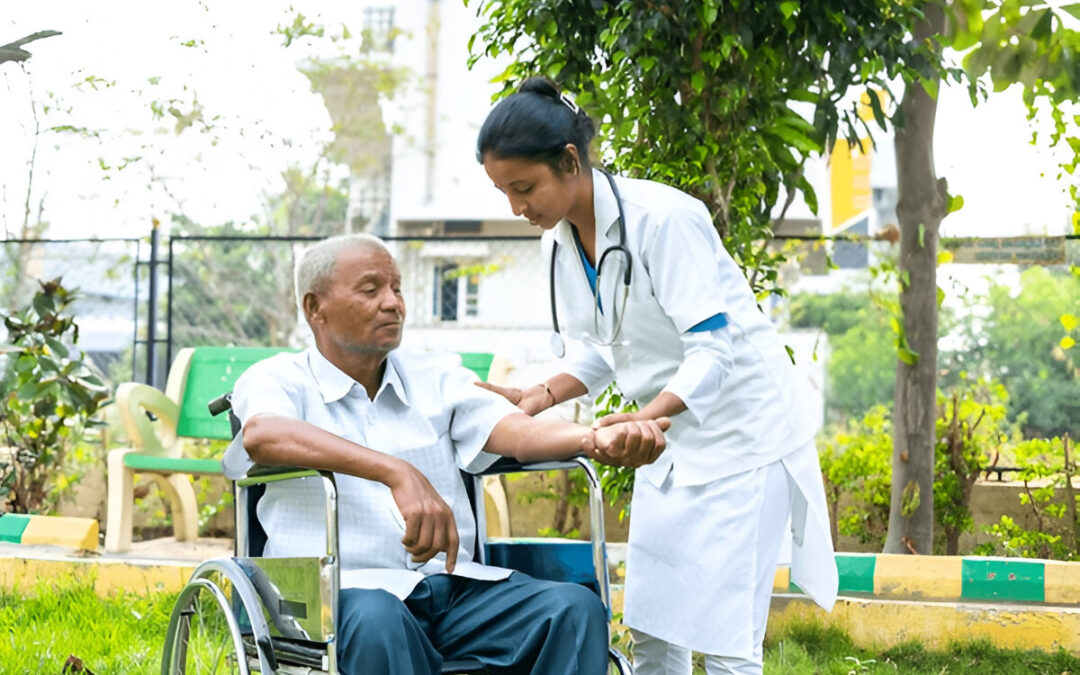
Families often do everything they can to care for an elderly loved one at home. But when care needs increase, managing everything on your own can become challenging. Whether it is recovery after surgery, ongoing medical needs, or the need for closer supervision, additional support can make a meaningful difference.
When care needs become more complex
Many families in Kochi prefer to care for their elderly loved ones at home for as long as possible. At first, caring for an elderly loved one at home may involve helping with medicines, meals, or medical appointments. Over time, however, care needs can become more complex. Recovery may take longer than expected, strength may return more slowly, and pain may require ongoing attention. Sleep, appetite, and mobility may all be affected at the same time.
This is often when the strain begins to show. The elderly person may need more support than before, while family members may feel tired, worried, and uncertain about what to do next. At this stage, a geriatric care centre in Kochi can provide a more structured care environment, bringing together medical support, regular monitoring, and day-to-day assistance in one place.
A care centre may be worth considering when there is:
- recovery after surgery or hospital discharge
- weakness, balance issues or reduced mobility
- an increasing need for nursing or supervision
- pain or distress related to a serious illness
- growing emotional strain within the family
- an uncertainty about how to manage the next stage of care
Why transition and rehabilitation care matters
One of the most important roles of a geriatric care centre is supporting the period after hospitalisation. This stage is often more challenging than families expect. A senior may be medically stable enough to leave hospital but still not be ready to manage daily life independently. Walking, eating, sleeping, and carrying out everyday activities may continue to be difficult after an illness or surgery.
This is where transition and rehab care plays an important role. It bridges the gap between hospital care and everyday life. Recovery in later life is not only about medicines or exercises. It is also about rebuilding strength, returning to familiar routines, moving around safely, and receiving the support needed to regain independence.
Transition and rehab care can help with:
- continued recovery after hospital discharge
- closer supervision during a vulnerable stage of recovery
- improved mobility,balance, and strength
- support with everyday activities
- reducing the risk of setbacks or hospital readmission
- offering greater reassurance for loved ones
How does palliative care help protect quality of life?
Palliative care is often misunderstood. Many people associate it only with the final stage of life. In reality, it focuses on improving comfort and quality of life for people living with a serious, chronic, or life-limiting illness. There are times when medical treatment alone is not enough. Relief from pain, better symptom control, emotional reassurance, and a calm, supportive care environment become equally important.
An elderly person may need help managing breathlessness, fatigue, nausea, poor appetite, pain, or disturbed sleep. They may also need emotional support, as serious illness can bring fear, uncertainty, and distress. A geriatric care centre can provide this support consistently while also helping families feel less alone during what can be a very difficult time.
Palliative care may be appropriate when the focus is on:
- pain relief
- symptom management
- emotional comfort
- preserving dignity
- reducing fear and distress
- improving day-to-day quality of life
Hospice care: supporting families through the final stage
Hospice care is one of the most sensitive aspects of elder care. When a person is approaching the end of life, the focus often shifts from treatment to to comfort, dignity, and being present with loved ones. . Families may feel heartbroken, unprepared and emotionally exhausted. During this time, hospice care provides a calm, supportive environment for both the senior and the family.
Its purpose is not to change the outcome, but to alleviate suffering, ease distress, and help families spend less time managing care and more time together. While it cannot remove the sadness of the moment, it can make this stage more comfortable, peaceful, and dignified.
Care extends beyond medical needs
A good geriatric care centre offers more than medical support. It also provides an environment where seniors feel secure and emotionally supported. Families often worry about falls, medication errors, sudden weakness, or changes in condition that can be difficult to manage at home. In a dedicated care setting, trained professionals provide ongoing supervision, timely assistance, and structured daily care.
Emotional support is equally important. Seniors may experience fear, loneliness, or a loss of confidence, while family members may struggle with guilt, helplessness, and exhaustion. Compassionate care helps seniors feel respected and reassured, while giving families greater confidence that their loved one is receiving the attention they need.
This may include:
- prompt attention when health needs change
- supervised medication and nursing care
- support during periods of weakness
- coordinated medical and daily care
- routines that promote comfort and dignity
- a reassuring environment for seniors and their families
Families remain at the heart of care
Moving to a geriatric care centre does not reduce the family’s role. Loved ones know the senior’s routines, preferences, concerns, and sources of comfort better than anyone else. Their presence provides familiarity and emotional reassurance. The best outcomes are achieved when professional care and family involvement work together. .
They continue to play an important role by:
- sharing the senior’s routines, preferences, and care needs
- participating in care discussions and decisions
- offering emotional reassurance and companionship
- helping maintain a sense of familiarity and comfort
- staying involved in care without carrying the full responsibility alone
Looking for more information on geriatric care services in Kochi?
At KITES Senior Care, specialised services such as Transition and Rehabilitation Care, Palliative Care, and Hospice Care ensure that seniors receive care suited to their changing needs. Whether transitioning from hospital, home, or another care setting, our experienced and compassionate team provides continuity of care through a proprietary 7-Star Assessment Process and a structured care plan tailored to each individual’s needs.
With 24×7 medical supervision, nursing care, physiotherapy, occupational therapy, speech therapy, geriatric counselling, nutritious meals, and emergency management, we bring together comprehensive clinical care and everyday comfort under one roof. Our thoughtfully designed facilities and coordinated approach support recovery, comfort, and overall well-being while giving families greater confidence throughout the care journey.
For seniors living with serious, chronic, or life-limiting illnesses, our palliative and hospice care services focus on pain management, symptom relief, comfort care, and counselling. The aim is to improve quality of life while helping seniors and their families feel supported with dignity, compassion, and reassurance.
To know more, contact our team.